IPv4 to IPv6 Converter
Enter your valid IPv4 address to convert it into IPv6.

What Is an IP Address?
An IP address (Internet Protocol address) is a unique number that identifies a device on a network, like a "home address" for your computer or phone on the internet.
It serves two main functions:
What are IPv4 and IPv6?
IPv4 and IPv6 are both IP addresses, with the same purpose but different capabilities.
IPv4 (Internet Protocol version 4) is the fourth version of the Internet Protocol, introduced in 1981. It uses a 32-bit addressing system, which allows about 4.3 billion unique addresses.
IPv4 addresses are written in decimal format and look like this:
192.168.0.1Because of the limited number of addresses and the explosive growth of the internet, IPv4 has relied heavily on techniques like NAT (Network Address Translation) to stretch its usability.
IPv6 (Internet Protocol version 6) is the newest version of the Internet Protocol, introduced in 1998 to replace IPv4. It uses a 128-bit addressing system, which allows about 340 undecillion unique addresses (enough for every device in the world) to have their own unique address.
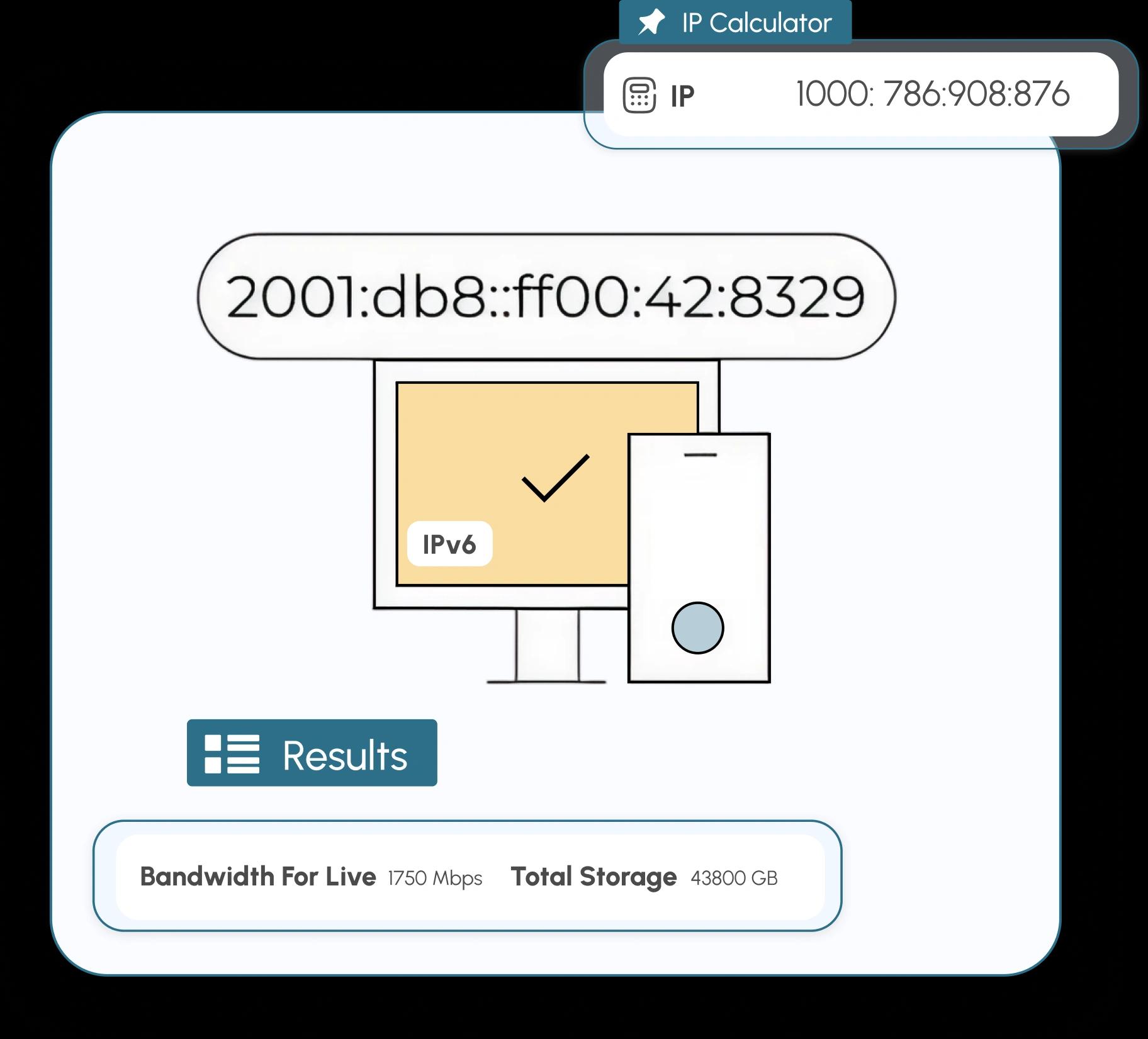
IPv6 addresses are written in hexadecimal format.
as shown here:
2001:0db8:85a3:0000:0000:8a2e:0370:7334IPv6 was designed not only to solve the IPv4 exhaustion problem but also to make internet communication more efficient, secure, and scalable.
Why Replace IPv4 with IPv6 Addresses?
IPv4 served as the only Internet protocol for about 17 years before IPv6 was introduced. And even after IPv6 appeared, IPv4 continued to work "perfectly fine" for about 30 years, but only because of workarounds like NAT (Network Address Translation) to stretch the limited addresses.
Now, IPv4 is no longer enough because it's running out of IP addresses and lacks scalability. This is a massive thread for the World Wide Web and is precisely why we need IPv6.
Here is what IPv6 provides us with:
340 undecillion addresses, which are enough for every device on Earth (and more).
Every device has a unique public IP, making communication simpler and faster.
Supports multicast and anycast instead of broadcast, resulting in less wasted bandwidth.
Has IPsec built in, making it easier to secure communication by default.
Ensures smooth growth without running out of unique identifiers.
IPv4 is the older system with limited addresses and reliance on NAT. IPv6 is newer, with a huge address space, built-in security, and simpler, faster packet handling.
So, IPv6 is designed to replace IPv4 as the Internet grows.
Stay in tune with modern technology changes.
Do IPv4 and IPv6 co-exist?
Both IPv4 and IPv6 are running side by side instead of one replacing the other overnight. This is because the internet hasn't fully switched to IPv6 yet. Most networks, devices, and websites still support IPv4, because not all systems are ready to switch. On the other hand, IPv6 is needed because IPv4 addresses are running out.
So IPv4 and IPv6 have to co-exist until every system is ready for IPv6 (or maybe something new and better).