IPv6 to IPv4 Converter
Enter your valid IPv6 address to convert it into IPv4.

What Is an IP Address?
An IP address (Internet Protocol address) is a unique numerical identifier assigned to a device on a network, acting like a digital home address that allows computers and phones to communicate over the internet.
It has two main functions:
What are IPv4 and IPv6?
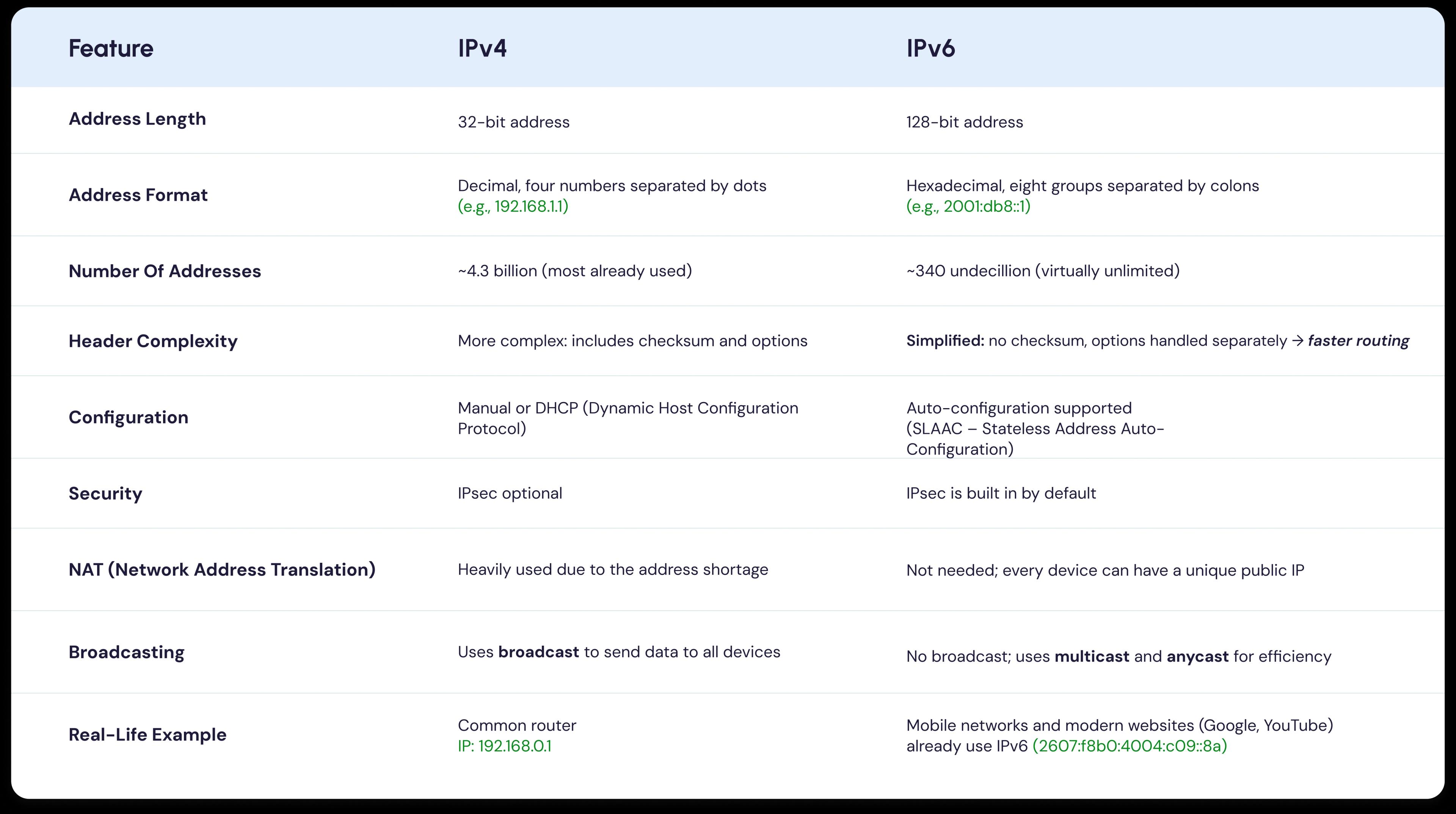
IPv4 and IPv6 both serve the same purpose: identifying devices on a network, but they differ greatly in capacity and design.
IPv4 (Internet Protocol version 4) was introduced in 1981 and uses a 32-bit address space, providing roughly 4.3 billion unique addresses.
IPv4 addresses are written in decimal format and look like this:
192.168.0.1As the internet grew rapidly and available addresses became scarce, IPv4 began relying on solutions like NAT (Network Address Translation) to extend its lifespan.
IPv6 (Internet Protocol version 6), introduced in 1998, was created to overcome IPv4’s limitations. It uses a 128-bit address space, offering an enormous number of unique addresses—enough to assign a distinct address to virtually every device worldwide.
IPv6 addresses are written in hexadecimal format.
as shown here:
2001:0db8:85a3:0000:0000:8a2e:0370:7334Beyond addressing exhaustion, IPv6 improves efficiency, scalability, and security across modern networks.
5 Reasons Why to Convert Back to IPv4
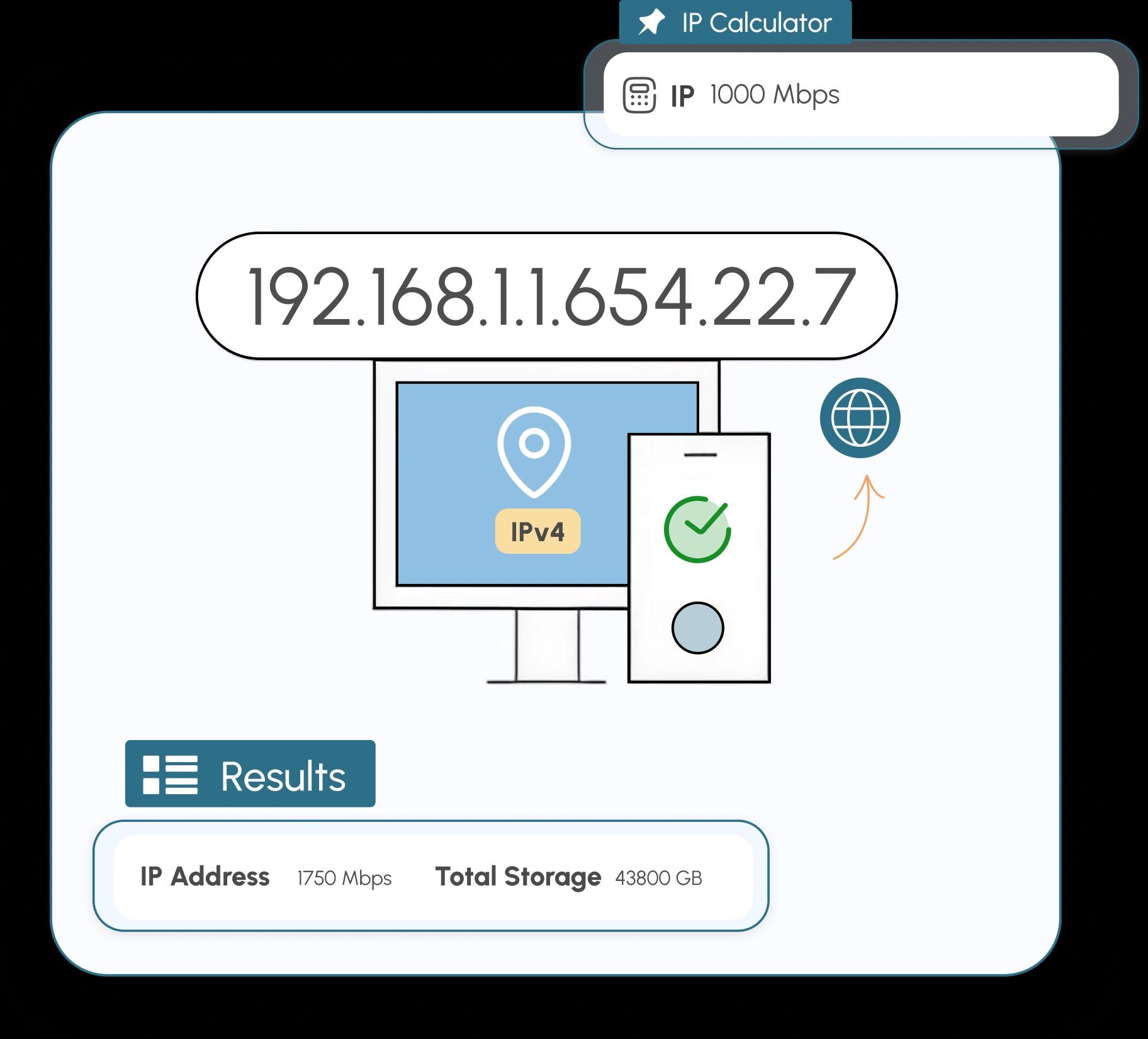
Even though IPv6 is here to replace IPv4, the latter remains in the game for these main reasons:
1
Many older devices, applications, and systems only support IPv4, so converting back ensures compatibility.
2
Most private and corporate networks still rely on IPv4 with NAT, requiring conversion for access.
3
In dual-stack environments, IPv4 may be preferred as a fallback option for stability or routing.
4
Network monitoring, security tools, and logging systems often work better with IPv4 addresses.
5
Transition technologies like NAT64 or DS-Lite depend on converting IPv6 traffic back to IPv4.
IPv4 vs IPv6