How to Make a Short Video App | 2026 Complete Guide


Millions of entertainment sources at our fingertips, yet it feels like something is missing. Like whatever exists is never enough.
We create different formats for the same content, switch between trends overnight, and constantly look for better app layouts. Over and over again.
And the reason we run in this loop is that our attention spans grow shorter. We seek immediate, short-term dopamine sources.
What did entertainment demand lead us to this time? It's the new rising star of short videos - the micro-drama. This is a video format for short, episodic drama content.
What's the reason behind its rising popularity? Do you need a micro-drama app, and if so, how can you make one?
You'll get all the answers one by one, so let's get to the bottom of this.
What Is a Micro-Drama App?
The Micro-drama app is a digital video platform that delivers short, episodic drama content.
These apps are typically in vertical format and fully optimized for mobile viewing. Episodes usually range from 30 seconds to 3 minutes, allowing users to consume stories in brief sessions.
From a technology platform perspective, micro-drama apps represent a shift in how video experiences are structured, delivered, and consumed.
You pick up your mobile, open the micro-drama app, scroll, and enjoy.
Micro-Drama Apps as a Format, Not a Genre
There's a little confusion about the meaning of micro-drama. Let's clear the air.
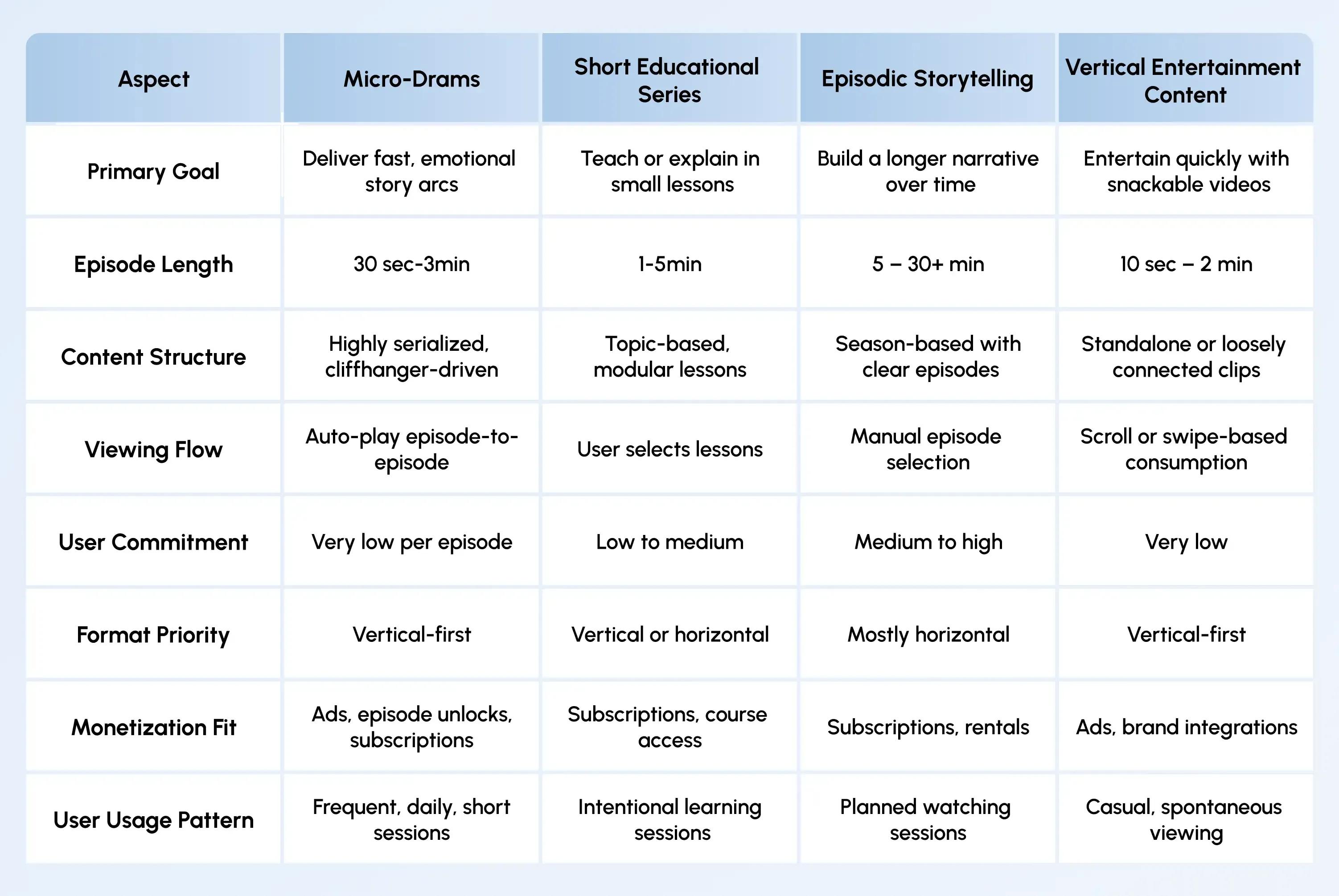
From a technical standpoint, micro-drama is a content format, similar to live TV, VOD, or short clips. The same platform infrastructure can support:
- Micro-dramas
- Short educational series
- Episodic storytelling
- Vertical entertainment content
What changes is how content is structured and consumed, not the underlying streaming principles.
Here are the differences between the formats we just mentioned:
How Micro-Drama Apps Work
Since micro-drama applications are built around serialized storytelling, the content is broken into multiple short episodes that play sequentially.
Everything is more than simple.
Users open the app and start watching short episodes immediately, without long loading times or complex navigation.
Episodes play in sequence, allowing viewers to follow a story in small parts and continue exactly where they left off.
That's all.
It's incredibly convenient for every user:
- Scroll or swipe to discover new series (quick and accessible)
- Watch episodes that last a few seconds or minutes (great for short attention spans)
- Resume stories automatically from the last watched point (low effort for users)
- Choose how to access content (free with ads, unlocked episodes, or premium access)
The experience focuses on simplicity, so users can enjoy serialized stories anytime: during short breaks, on commutes, or during downtime.
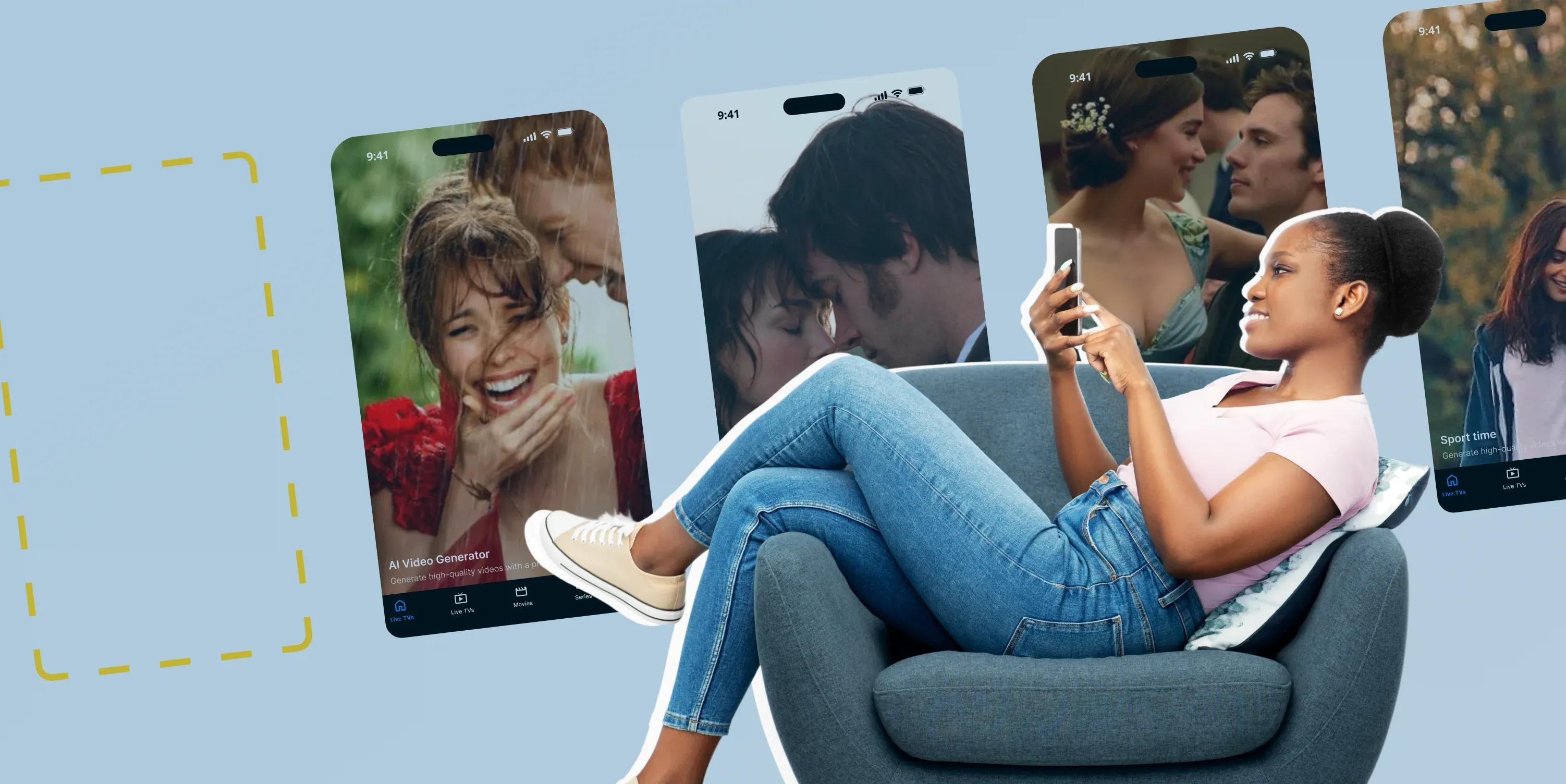
Here is an example of a micro-drama app by inoRain, read our case study
How to Make Your Own Micro-Drama App?
From here, we'll talk about everything you need to support and consider to make your own micro-drama app.
To make the process easier, we've broken the key concepts into a few sections, starting with the core characteristics and moving on to technical parts and monetization.
Get ready to explore everything from the basics to the top.
Core Characteristics of Micro-Drama Apps
The micro-drama experience is designed to remove friction, minimize navigation, and keep viewers inside the story flow.
Therefore, this format has three main traits:
- Very short episode durations optimized for mobile viewing
- Seamless auto-play from one episode to the next
- Instant resume from the last watched point
The result is a vertical, mobile-first video with fast startup times, matching how users actually watch content on their phones.
Every interaction is designed to feel immediate and effortless.
And here are the technical parts you need to support to achieve the said design in your micro-drama app.
1. From a platform (micro-drama app) standpoint, this requires:
- Optimized vertical video delivery
- Low-latency playback and fast loading
- Continuous session handling
They rely heavily on real engagement signals to guide what users see next. Completion rate, episode continuation, and replays directly influence discovery and recommendations.
2. To support this, the platform must:
- Track fine-grained viewing behavior in real time
- Understand series and episode progression
- Adapt recommendations continuously
Micro-drama apps also support flexible monetization and detailed analytics while keeping content ownership and creative control with the content owner.
3. At the infrastructure level, this means:
- Multiple monetization models running in parallel
- Scalable analytics and reporting
- Reliable delivery as usage grows
On this exact note, let's explore what kind of monetization is used for micro-drama apps.
Monetization for Micro-Drama Apps
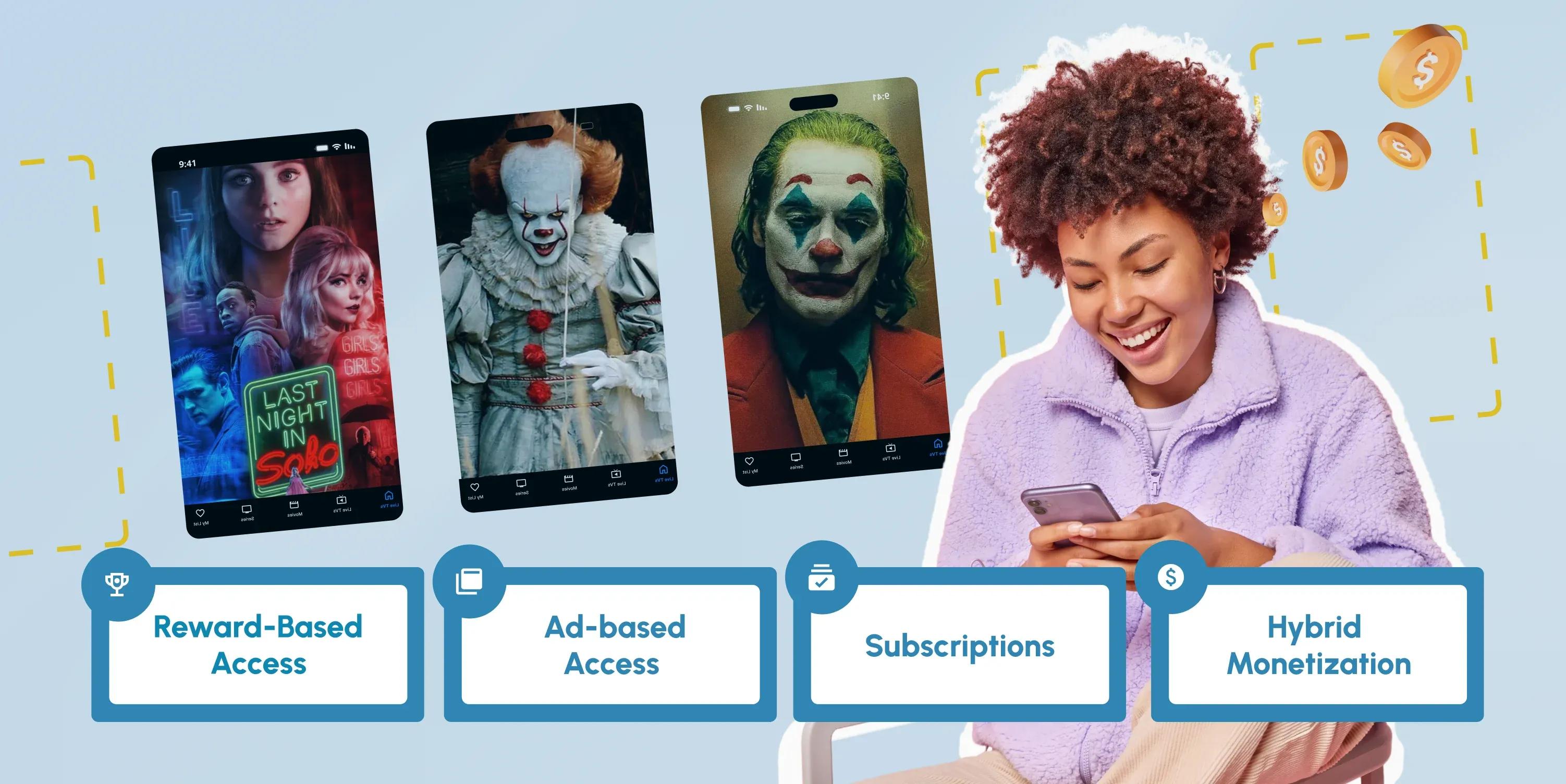
Short video and micro-drama apps monetize content in ways that match quick, frequent viewing habits.
From a platform perspective, the goal is to support multiple revenue models while giving content owners full control over pricing, access, and strategy.
From a user perspective, monetization should feel natural and optional. Users have options: watch for free, upgrade for an ad-free experience, or unlock episodes at their own pace.
Here are the core monetization models used in micro-drama apps:
1. Ad-Supported Video (AVOD)
AVOD keeps access free while monetizing attention through ads placed naturally within the viewing flow, such as before episodes, between short episodes, or as rewarded ads to unlock content.
To support AVOD, the platform must handle ad insertion (SSAI or CSAI), control ad frequency and pacing, support vertical ad formats, and track impressions and completions accurately.
These technical features ensure monetization does not disrupt story continuity.
2. Subscription-Based Access (SVOD)
SVOD offers unlimited or tiered access through recurring payments, often with options like ad-free viewing or early access.
For this monetization model, your micro-drama app should manage user authentication, entitlements, subscription lifecycles (trials, renewals, cancellations), cross-device access, and revenue and churn analytics.
3. Hybrid Monetization (like AVOD + SVOD)
Hybrid models combine free, ad-supported viewing with optional paid upgrades, allowing different user segments to coexist in the same app.
This requires the same technical coverage needed for both AVOD and SVOD.
4. Episode Unlocking and Micro-Transactions
Some apps monetize individual episodes or story arcs through one-time purchases, bundles, or in-app currency.
Again, you must support secure transactions, episode-level access control, wallet or credit systems, and full purchase history tracking.
5. Reward-Based Access
Reward-based models let users unlock content through engagement rather than payment, such as watching ads or completing daily actions.
This requires automated reward logic, verification systems, fraud prevention, and progress tracking to maintain fairness and scalability.
6. Brand Integrations and Sponsored Content
Indirect monetization comes from brand partnerships, including sponsored episodes or contextual placements within stories.
Here, you must have extra support for content labeling, performance analytics, and flexible content grouping, while commercial agreements remain fully controlled by content owners.
Sounds like there's a lot to handle on the monetization slide, but we have more to cover in technical features.
The Technology Stack You Need
To make a micro-drama app, you must start with a technical stack that supports short episodes, fast playback, and scale.
You need a platform that can deliver, manage, and monetize content without adding complexity.
1. Video Ingestion and Processing
You ingest short episodes and prepare them for different devices and network conditions. The system transcodes videos into adaptive formats, optimizes them for vertical viewing, and ensures smooth playback-even on slower connections.
2. Content Management System (CMS)
You organize series, episodes, metadata, and access rules in one place. The CMS controls episode order, supports multiple series at scale, and lets you update content without releasing new app versions.
3. Short Video Feed and Recommendations
You deliver a seamless feed that auto-plays episodes and adapts to user behavior. The system tracks watch time and completion to personalize the flow and always surface the right next episode.
4. User Progress and State Tracking
You automatically save where users stop and resume playback instantly. The platform remembers progress, access level, and unlocked content to keep viewing frictionless.
5. Multi-Platform App Delivery
You launch and scale the app across iOS, Android, and other platforms with consistent performance and reliability as your audience grows.
Bring It All Together with Ease
If you've read this far, you're dedicated to getting your own micro-drama app. But, making everything from scratch sounds expensive, complicated, and just too tiresome.
Before you overthink, we have great news.
inoRain already has all these layers together in a single, ready-to-launch micro-drama app platform.
We handle video processing, CMS, feeds, progress tracking, monetization support, and multi-platform delivery so that you can focus on stories and add your content.
Let us build the infrastructure where you can stream, monetize, and grow.
Explore the micro-drama app that'll lead to your streaming success here.
Frequently Asked Questions

Content Manager
Anush Sargsyan is a content manager specializing in B2B content about OTT streaming technologies and digital media innovation. She creates informative, engaging content on video delivery, OTT monetization, and modern media technologies. The goal is to help readers easily understand complex ideas. Her writing is the bridge between technical detail and practical insight, making advanced concepts accessible for both industry professionals and general audiences.
Subscribe to Our OTT Blog
Want to learn more about OTT technology and monetization? Leave your best email here, and we'll keep you updated with our weekly articles.
Loading...