Hybrid Monetization for OTT: The Ultimate Model for Success


Subscriptions are losing momentum, while ad-based access continues to rise.
At the same time, audiences still want premium, ad-free experiences.
Rather than forcing a single model (which won't work anymore), platforms are mixing and matching with hybrid monetization (HVOD).
This monetization model combines subscriptions, advertising, pay-per-view, and more into one strategy.
That's a snapshot of today's industry reality. To keep up, you must have more information.
From this guide, you'll learn everything you need to know about hybrid monetization: why it's growing so fast, how it works, and whether it's the right move for your platform.
As always, we'll start with the basics.
What Exactly Is Hybrid Monetization?
Hybrid monetization, or HVOD (Hybrid video-on-demand), is a revenue model in which a streaming platform uses multiple monetization models simultaneously.
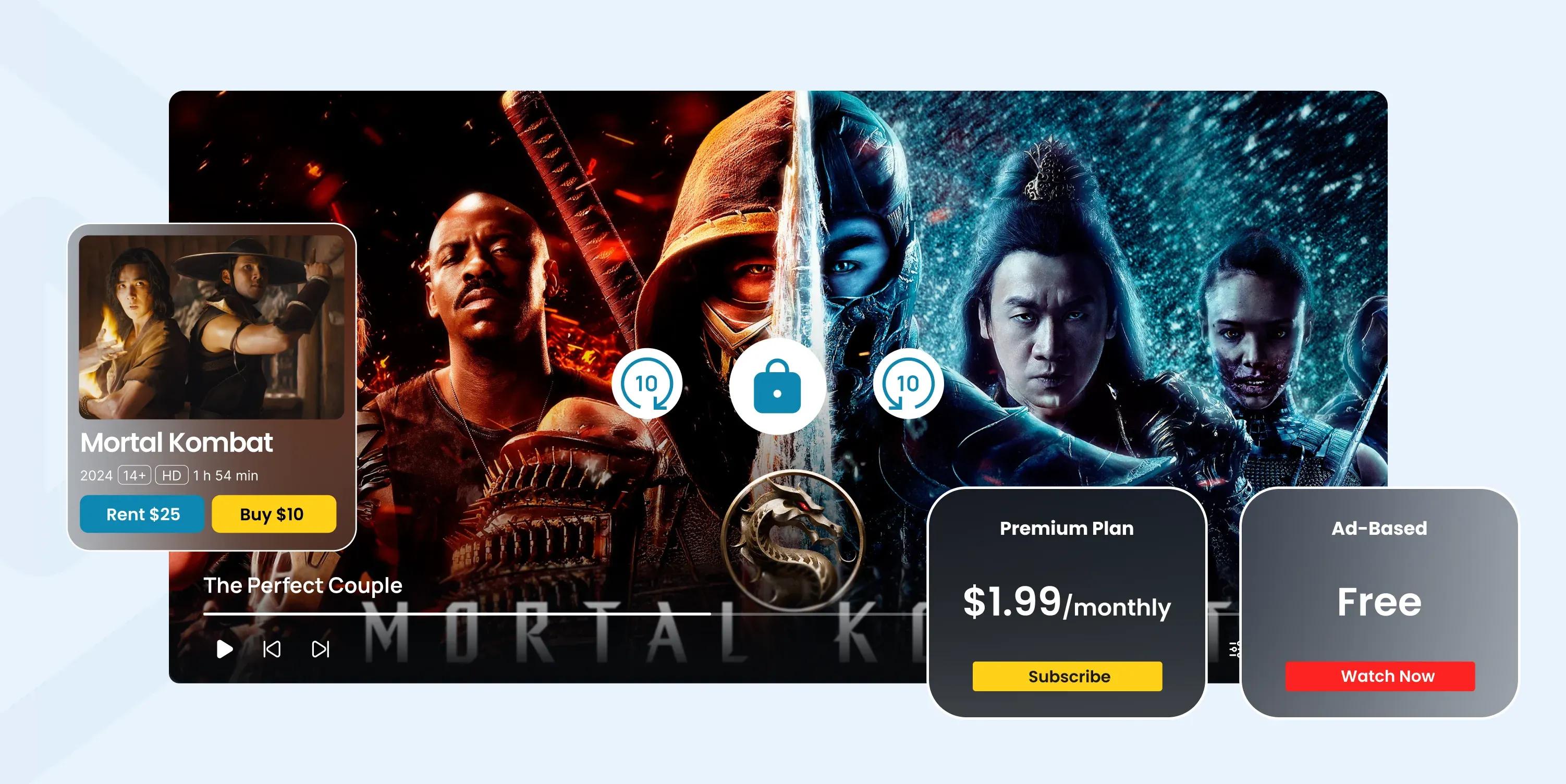 We must clear some misconceptions. Hybrid monetization is not just SVOD + AVOD. Yes, it's the most popular method, but not the only.
This was the technical description. But if we explain it simply, this is how HVOD works.
Instead of relying solely on subscriptions or ads, the platform combines subscription (SVOD), ad (AVOD), and pay-per-view (TVOD) models to reach and cater to more viewers.
It can be:
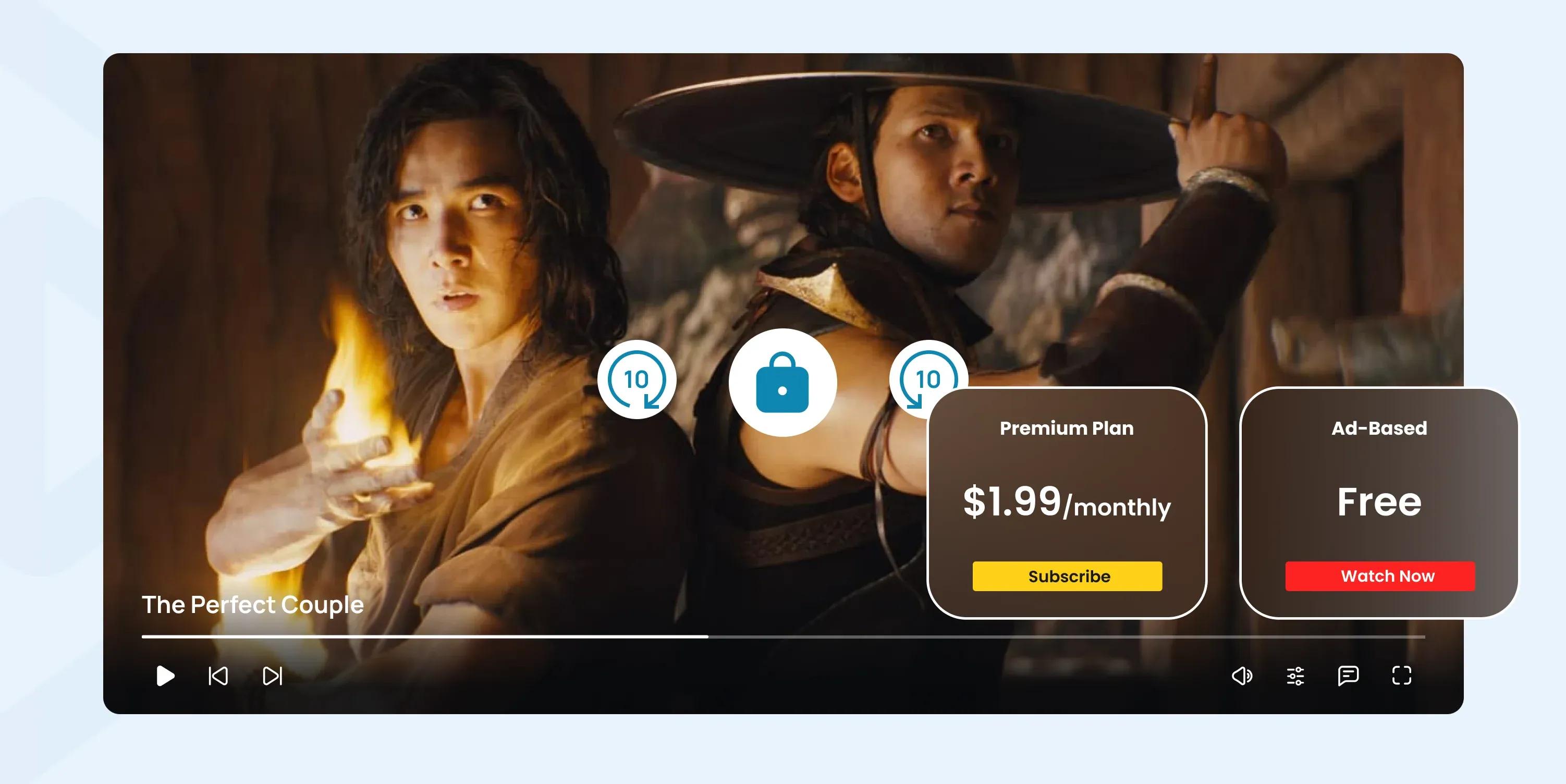
Subscription + Ad-Based Access
Users choose between a lower-priced plan with ads or a higher-priced ad-free subscription.
Pay-Per-View + Subscription
Subscribers access the main library, while special events or new releases require a one-time payment.
Free with Ads + Premium Subscription
Casual viewers watch content for free with ads, while loyal users pay to remove ads and unlock extras.
Monthly Subscription + Annual Subscription
Users select flexible monthly access or save money with a discounted annual plan.
Basic Subscription + Premium Add-Ons
Users subscribe to a base plan and pay extra for premium channels, genres, or exclusive content.
AVOD + FAST Channels + SVOD
Platforms combine free ad-supported channels with on-demand content and premium subscriptions.
Subscription + Ad-Free Upgrade
All users subscribe, but can pay more to completely remove ads.
HVOD is designed to serve user convenience and open new income streams for content owners.
Also, it evolves over time.
You may begin with AVOD to quickly build a user base, then introduce SVOD once enough content or brand loyalty is established. Or you can launch with SVOD and introduce TVOD for new releases or live events.
Or do both, who's stopping you?
Why Is Hybrid Monetization So Popular?

Subscription-only models served well for the past decade, but they stopped scaling. They can't meet the user demand anymore.
And users want to have the flexibility of choice. They want to be in complete control of how they access, choose, and watch content.
HVOD provides it all.
This monetization model covers all the needs a user may have, and it fully adapts to the user's demand.
Also, no content provider would say no to diverse revenue streams that hybrid monetization offers.
HVOD is one of the rare cases when user demand actually aligns with content owners' needs. With Hybrid monetization, they get higher revenue without losing users to churn (20-30% lower churn compared to SVOD-only models).
So here is the deal.
Both sides benefit from HVOD; that's the reason for its popularity, and it'll be the reason for its longevity.
At least before the streaming industry comes up with a more convenient and efficient monetization model, hybrid will stay on TOP.
How Does HVOD Work?
A hybrid OTT monetization model combines multiple revenue streams within one platform.
Now, to make all these work effectively, HVOD requires a smart content strategy, flexible technical infrastructure, and user-focused design.
Here's how it plays out step-by-step:
Step 1. Content Strategy
Content is the core of any monetization model. For HVOD, you must classify and distribute content based on its value, audience appeal, and lifecycle stage.
Here is a guideline:
For AVOD content: Free-to-access titles monetized through ads; great for onboarding new users or monetizing long-tail content.
For SVOD content: Premium, ad-free access for subscribers; often includes exclusives, early releases, or full seasons.
For TVOD content: Pay-per-view or rental-based offerings; ideal for live events, new movie releases, or niche content.
So, content segmentation is needed for balance. This way, you easily manage entry points at different levels - free, subscriber, or one-time purchase.
Step 2. Technical Architecture and Monetization Logic
Hybrid monetization demands a flexible tech stack that can deliver varied access rules and billing logic.
Here are the technologies we're talking about
- Entitlement systems: These control who sees what, based on subscription status, purchases, or user behavior.
- Ad Insertion Tools: These serve dynamic ads during AVOD streams, with targeting powered by user data.
- Billing Engines: These process recurring payments for SVOD and single transactions for TVOD.
Your infrastructure must support real-time decision-making based on the monetization method used for each user.
Example: Showing an ad to one user (who chose ad-based content) while another watches the same content ad-free under a subscription (SVOD).
Step 3. Personalized User Journeys
And the most important part: personalization.
A successful hybrid model adapts to each user's preferences and behaviors. It's all about flexibility and personalization.
- New users may start with AVOD, then get offers to upgrade to SVOD.
- Loyal viewers might be interested in TVOD bundles for new releases.
- High-engagement users can be segmented and retargeted with special offers or recommendations.
And a million other cases like this. HVOD covers them all; you just need to use it the right way (catering to your users' needs).
Once you get the hang of it, you can increase conversion rates and your content's lifetime value.
In Short
Thanks to its flexibility, hybrid models are more profitable for OTT than static pricing approaches.
Challenges in Hybrid Monetization
From technical integration to user experience, you must prepare for several operational and strategic challenges:
1. Technical Complexity
Since HVOD implements multiple monetization layers, it requires a highly adaptable backend infrastructure.
Here's what you'll need:
- A robust content management system (CMS) that can handle dynamic access controls and multiple entitlement levels.
- The integration of billing engines, ad servers, and user authentication systems must be seamless to avoid delays and errors in access.
- Managing real-time delivery of different content formats (e.g., ad-supported vs. ad-free) on various devices adds another layer of complexity.
Without a unified platform or technical team experienced in hybrid models, the setup and maintenance can quickly become unmanageable.
What a great thing, we have exactly what you need. Get all the technical coverage you need for hybrid monetization on your own OTT streaming platform. Control everything from a single interface.
2. Security and Digital Rights Management
Hybrid monetization adds complexity to content security because each monetization model often comes with different licensing rules.
AVOD, SVOD, and TVOD may require separate permissions, usage limits, or playback conditions. Managing all of this within a single platform makes rights enforcement more challenging.
Regional restrictions add another layer of difficulty. Content may be allowed for ad-based viewing in one market but blocked or time-limited in others.
Keeping track of expiration dates, exclusivity windows, and territory-based rules increases the risk of misconfiguration.
When security and rights are not properly managed, the consequences are serious. Platforms can face content takedowns, contract breaches, or forced blackouts.
This is why strong DRM (Digital Rights Management) and automated rights management are essential to protect agreements and maintain uninterrupted distribution.
And that's exactly how inoRain handles security for your content monetization and more. Explore more about DRM here.
3. Data Integration and Reporting
Hybrid models generate complex datasets spanning subscriptions, ad metrics, and transactional revenue.
This is how it works:
- Stitching together these sources into a unified analytics dashboard requires smart data architecture.
- Tracking user journeys across monetization paths (e.g., AVOD → SVOD) is critical for optimizing conversions-but not easy to implement.
- If reporting is siloed, decision-makers may misinterpret performance and ROI by channel.
So, advanced analytics and integrated reporting are essential for long-term success and growth optimization.
And since inoRain made it a mission to provide you with everything you need in a single interface, we've integrated user analytics too. You won't have to do anything except review the data to make informed, up-to-date decisions.
Any questions? Click the button below.
Who Should Use Hybrid OTT Monetization?

If your audience spans different regions, devices, and willingness to pay, relying on a single revenue model limits growth.
HVOD gives you the flexibility to monetize every viewer segment without sacrificing reach or premium value.
Based on this, here are the professionals who need HVOD the most.
1. Regional ISPs and MSOs
For ISPs, the biggest catch with HVOD is increasing ARPU without raising base prices.
They already own the customer relationship. By bundling AVOD and SVOD content into internet or cable packages, they add immediate value without increasing infrastructure costs.
Hybrid monetization allows them to upsell premium content while keeping entry-level access free or low-cost.
If you're an IPS looking for a working solution, click here.
2. Content Creators
Constantly monetize every piece of content, not just new releases.
That's the power hybrid monetization gives to content creators.
The thing is, creators often sit on large libraries that no longer generate revenue. HVOD helps them to place archived or evergreen content in AVOD tiers for ongoing ad income, while reserving exclusive, early-access, or premium cuts for paying fans.
This way one content library turns into multiple revenue streams without fragmenting the audience.
We have something for content creators, too. Feel free to explore.
3. TV Providers and Broadcasters
Broadcasters need reach for advertisers and exclusivity for loyal viewers. Hybrid monetization delivers both.
It protects premium value while expanding reach.
Free, ad-supported access attracts broad audiences, while premium tiers unlock early releases, ad-free viewing, or exclusive events.
TVOD further supports high-impact moments like live sports, specials, or seasonal releases without committing users to subscriptions.
Dear TV Providers and broadcasters, you can start here.
4. TikTokers and YouTubers
Creators on social platforms rely heavily on algorithm-driven ad revenue. HVOD lets them diversify.
They can keep reaching high with free, ad-supported content while offering premium access, bonus material, or paid events to their most engaged fans. This way, TikTokers and YouTubers can reduce dependency on platforms and keep their entire monetization revenue.
Here is how to start independent monetization.
How to Monetize 2x More Audiences
You know that hybrid monetization is the way to go, but how can you start using it right now?
You can't manage everything all alone.
To solve this, we have one last thing to share.
Our best offer is an interdependent hybrid monetization on your own streaming platform.
You'll have your branding, content, audience, and monetization strategies all focused in a single advanced OTT platform. Fully under your control.
No technical knowledge needed.
And don't forget. No more platform fees.
Your whole monetization revenue is yours to keep.
Frequently Asked Questions

Content Manager
Anush Sargsyan is a content manager specializing in B2B content about OTT streaming technologies and digital media innovation. She creates informative, engaging content on video delivery, OTT monetization, and modern media technologies. The goal is to help readers easily understand complex ideas. Her writing is the bridge between technical detail and practical insight, making advanced concepts accessible for both industry professionals and general audiences.
Subscribe to Our OTT Blog
Want to learn more about OTT technology and monetization? Leave your best email here, and we'll keep you updated with our weekly articles.
Loading...