PVOD
 Anush Sargsyan
PVOD Meaning
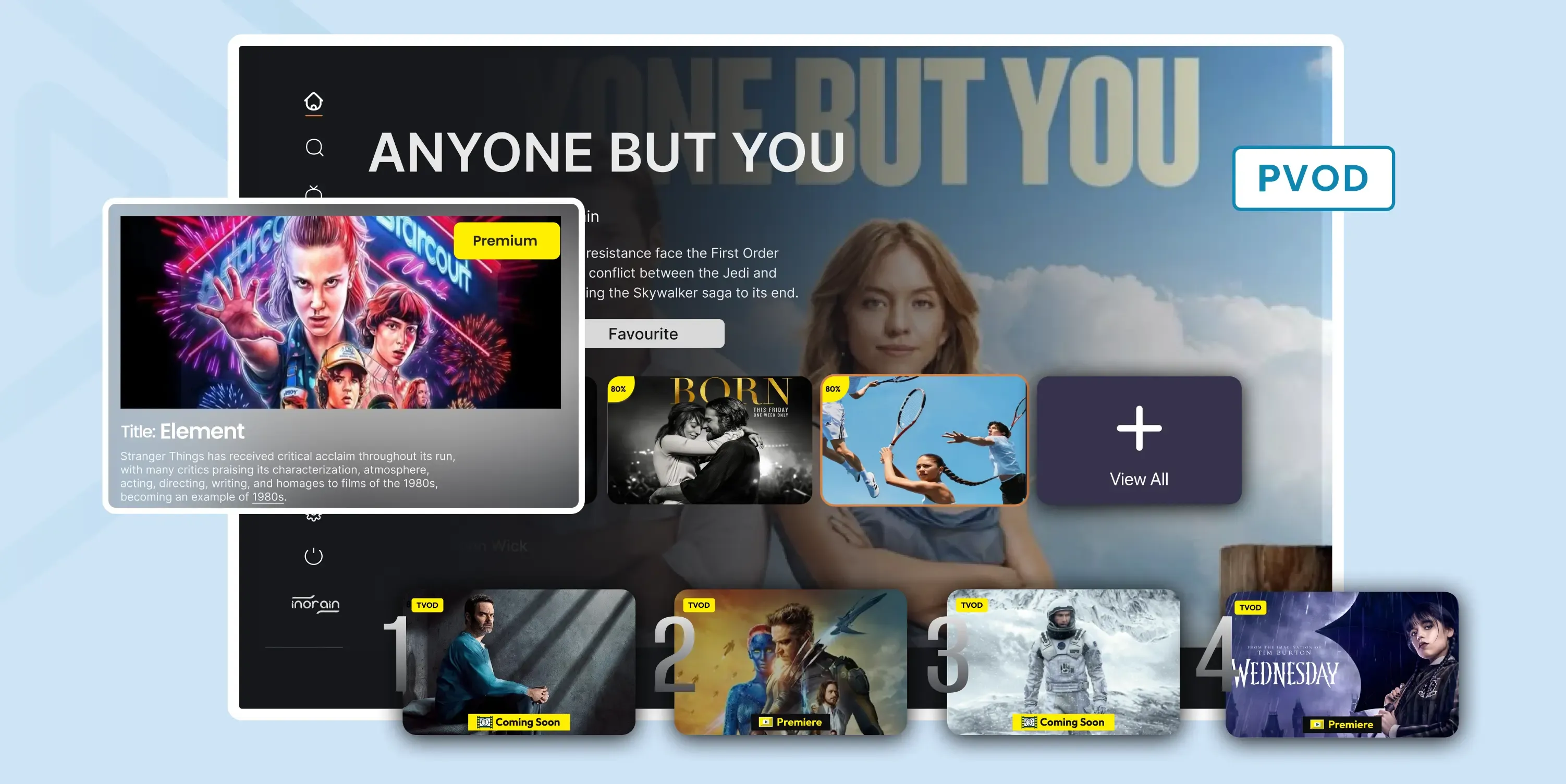
PVOD is a form of TVOD that charges a higher one-time fee for early access to high-profile content, often at the same time or shortly after theatrical releases. It’s intended for users willing to pay more to watch premium content at home before it’s widely available.
Key Features of PVOD
- Premium pricing for early access to blockbuster titles
- No subscription needed; payment per title
- Common during theatrical windows or post-theater exclusives
- Time-limited access, often for 48–72 hours
- Compatible with smart TVs, streaming boxes, and mobile devices
PVOD in the VOD Ecosystem
The Video on Demand (VOD) ecosystem allows users to access content whenever they choose, breaking away from fixed TV schedules and limitations.
Within this space, platforms use different monetization models to serve diverse viewing preferences:
PVOD (Premium Video on Demand): Offers early access to high-profile or theatrical titles for a one-time elevated fee. Users pay to watch newly released content at home, often during or right after its cinema debut.
TVOD (Transactional Video on Demand): Charges users a standard one-time fee to rent or purchase individual titles.
SVOD (Subscription Video on Demand): Unlocks the full platform library for a recurring subscription payment.
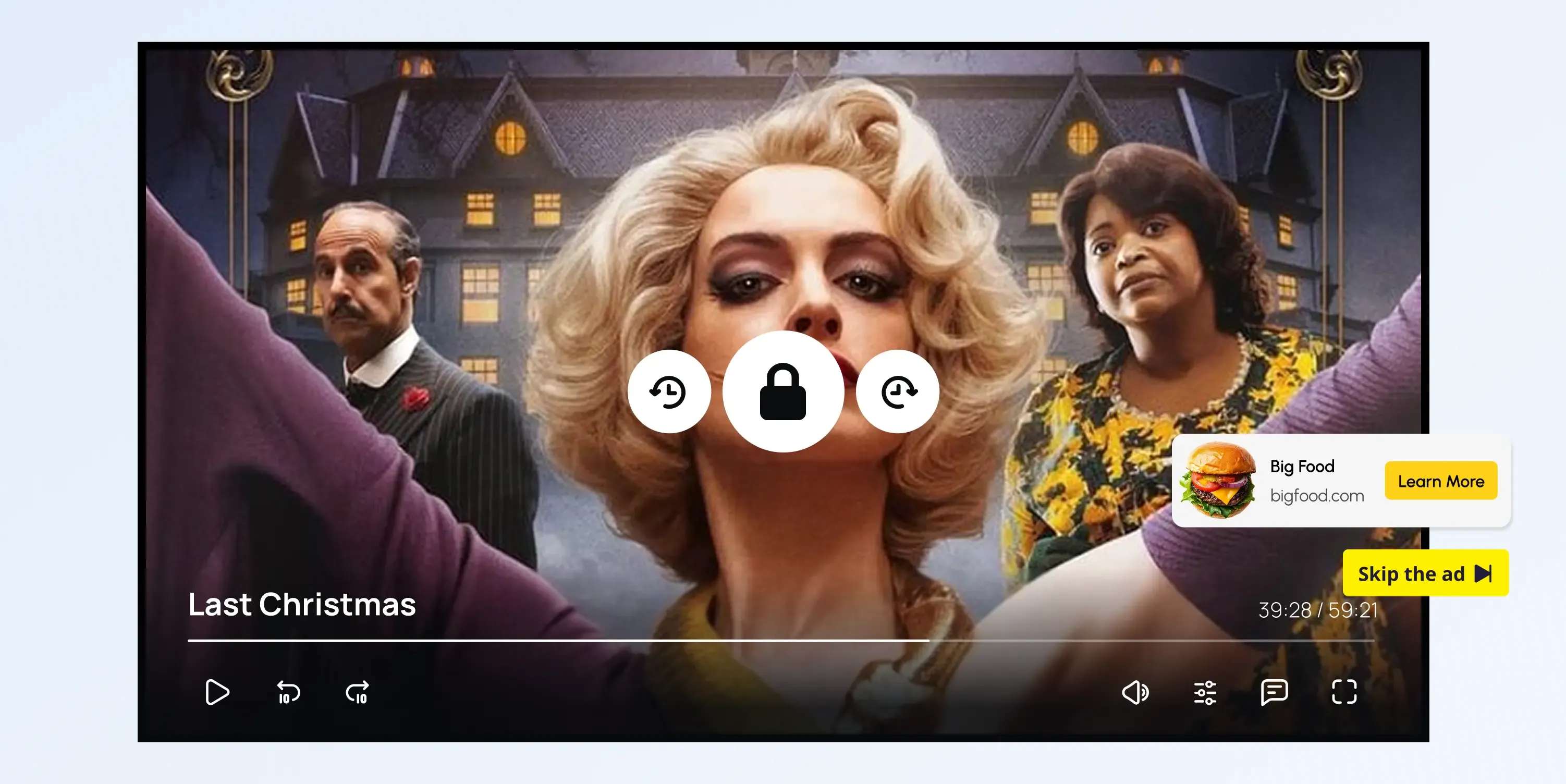
AVOD (Ad-Supported Video on Demand): Lets viewers stream content for free, with ads shown before or during playback.
PVOD vs TVOD vs SVOD vs AVOD
From the User’s Perspective
| Aspect | PVOD | TVOD | SVOD | AVOD |
|---|---|---|---|---|
| Access | Pay-per-view for premium early releases | Pay-per-view for regular titles | Unlimited content with a subscription | Free access with ads |
| Ad Experience | Ad-free | Ad-free | Mostly ad-free (some hybrid tiers exist) | Includes ads before/during playback |
| Cost | High one-time fee | Moderate one-time fee | Recurring monthly/yearly fee | Free |
| Content Type | New theatrical releases, exclusives | Standard catalog, post-theater titles | Full library, originals, licensed series | Select content, ad-friendly titles |
| Control | High—watch premium titles on demand | High—choose what to pay for | High—binge at your pace | Medium—watch with ad breaks |
| Commitment | No subscription required | No subscription required | Ongoing subscription required | None |
From the Content Provider’s Perspective
| Aspect | PVOD | TVOD | SVOD | AVOD |
|---|---|---|---|---|
| Revenue Model | Premium pricing for early access | One-time purchases or rentals | Predictable recurring income | Ad revenue based on impressions and CPMs |
| Monetization Speed | Fast—immediate revenue from high-value titles | Fast—instant revenue per transaction | Slower, but stable over time | Rapid scale with increased viewership |
| Audience Reach | Targeted—willing to pay a premium | Moderate—willing to rent/buy | Limited to subscribers | Broadest—free access encourages volume |
| Content Strategy | Focus on blockbuster, early-window content | Use the back catalog or niche offerings | Invest in originals and user retention | Maximize volume and appeal for advertisers |
| User Data Access | Purchase behavior and timing insights | Transactional data only | Rich user behavior and engagement insights | Ad-related data with some targeting capability |
| Churn Risk | None—no recurring model | None | High—users may cancel anytime | Very low—no commitment |
| Marketing Focus | Promote urgency and exclusivity | Title-by-title promotion | Retain and grow the subscriber base | Expand reach and increase ad views |
Frequently Asked Questions

Content Manager
Anush Sargsyan is a content manager specializing in B2B content about OTT streaming technologies and digital media innovation. She creates informative, engaging content on video delivery, OTT monetization, and modern media technologies. The goal is to help readers easily understand complex ideas. Her writing is the bridge between technical detail and practical insight, making advanced concepts accessible for both industry professionals and general audiences.
Related terms
AVOD (Advertising-Based Video on Demand)
Explore how AVOD works, its monetization model, and why it's popular for free streaming platforms. Read the full definition on inorain.com glossary.
CSAI (Client-Side Ad Insertion)
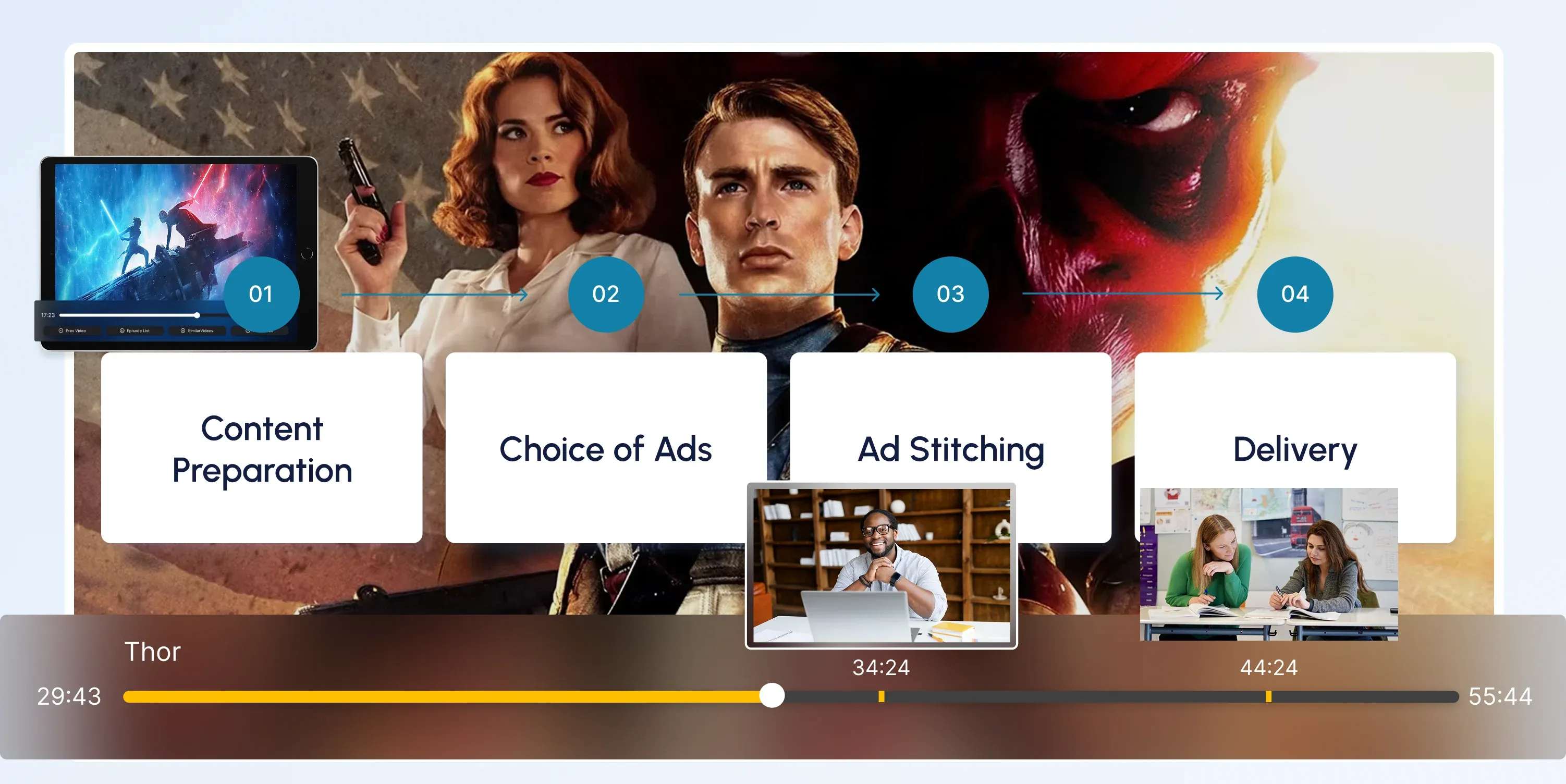
Learn how CSAI delivers ads through the video player, enabling targeting, tracking, and monetization.
- PVOD Meaning
- Key Features of PVOD
- PVOD in the VOD Ecosystem
- PVOD vs TVOD vs SVOD vs AVOD