Video Streaming Protocols: Types and Use Cases


Video streaming protocols are essential frameworks for delivering video content over the Internet. Each protocol is optimized for specific use cases. Understanding these protocols enhances streaming performance and helps you select the right one for your needs.
In this article, we’ll review the core factors to consider when picking the appropriate protocol. We'll also address the accompanying challenges and explain how these streaming protocols work.
What are Streaming Protocols?
Video streaming protocols are discrete standardized rules, regulations, and techniques that break down videos into smaller segments and reassemble them for delivery across the Internet to end users.
 These video streaming formats determine how data packets are sent and obtained, warranting uninterrupted playback and covering various devices and network states. The different protocols serve as delivery techniques responsible for fixing errors that may occur during transmission.
They aid in real-time communication, ensuring that data is appropriately and precisely delivered to the end user, allowing users to watch videos without any tedious buffering.
3 Types of Video Streaming Protocols
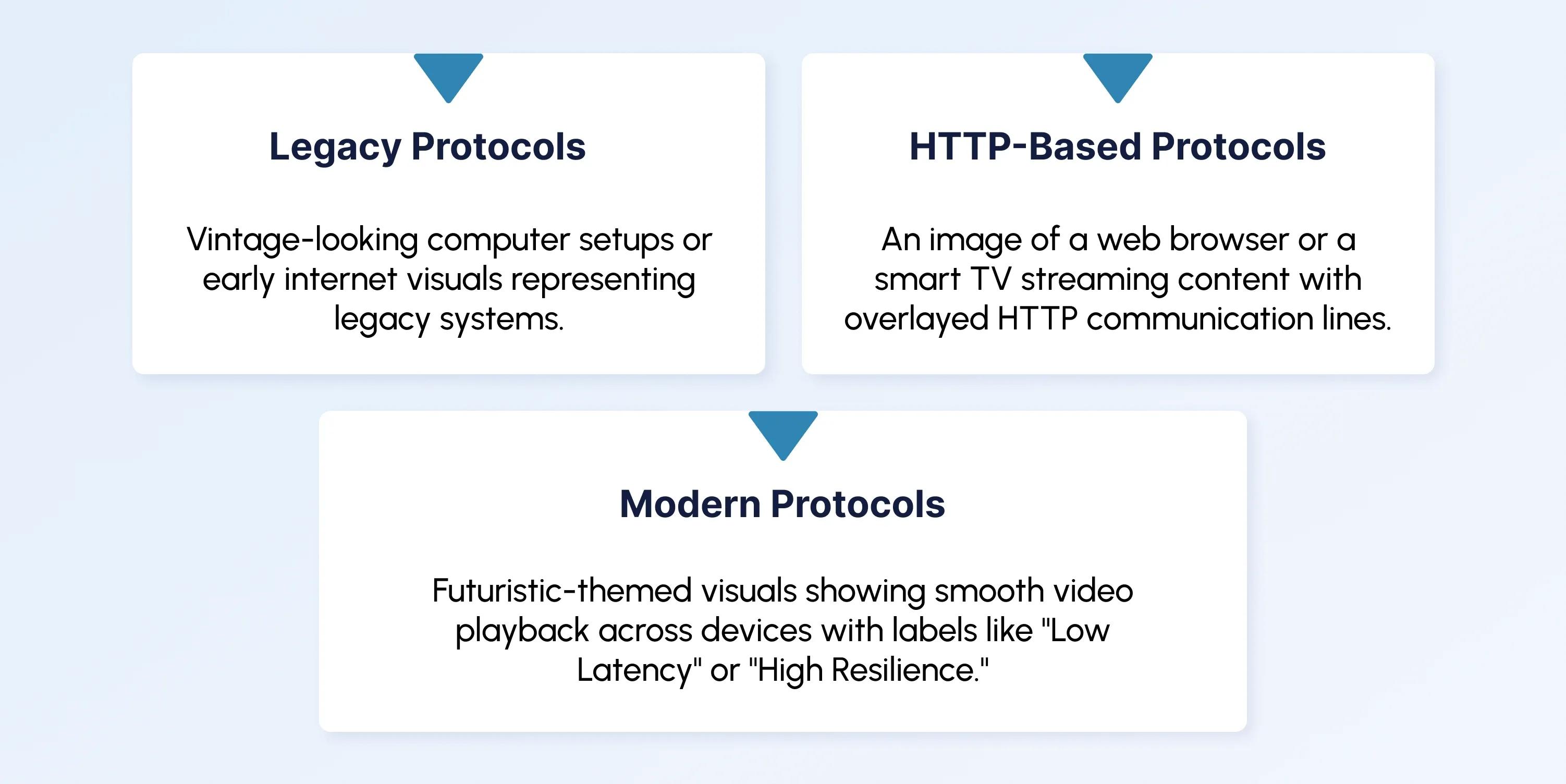 Determining which video streaming protocol works best with a user's device is essential. These unique protocols fall under one of the following three categories:
Legacy Protocols
Legacy protocols were rudimentary for early video streaming and only required basic authentication, such as usernames or passwords, to connect to web services, email clients, etc. However, these streaming protocols struggled with versatility and compatibility across varying platforms.
HTTP-Based Protocols
This type of request-response protocol has become a more scalable option. It harnesses a fundamental web framework to deliver adaptive streaming alongside refined performance across diverse platforms. It entails interaction with web resources, such as HTML files, by transmitting hypertext among clients and servers.
Modern Protocols
These streaming types are often open-source and emphasize the user experience through distinct aspects such as being resilient towards network fluctuations, backing up live and current content with enhanced quality and reliability, and, most notably, using low-latency video streaming protocols.
Although they are yet to be supported on a larger scale, these video streaming formats involve top-notch technologies, overcoming issues that the prior protocols failed to address.
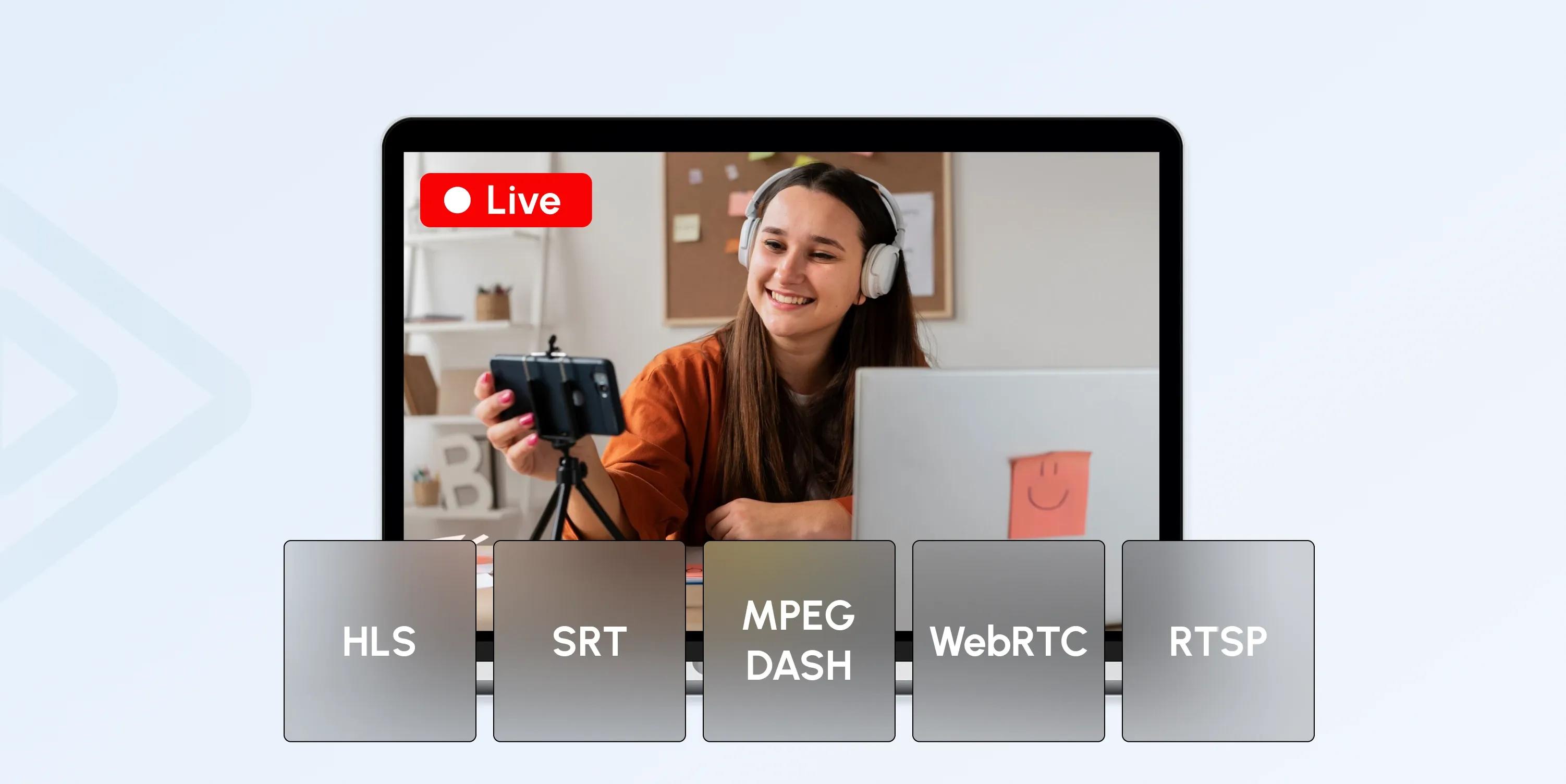
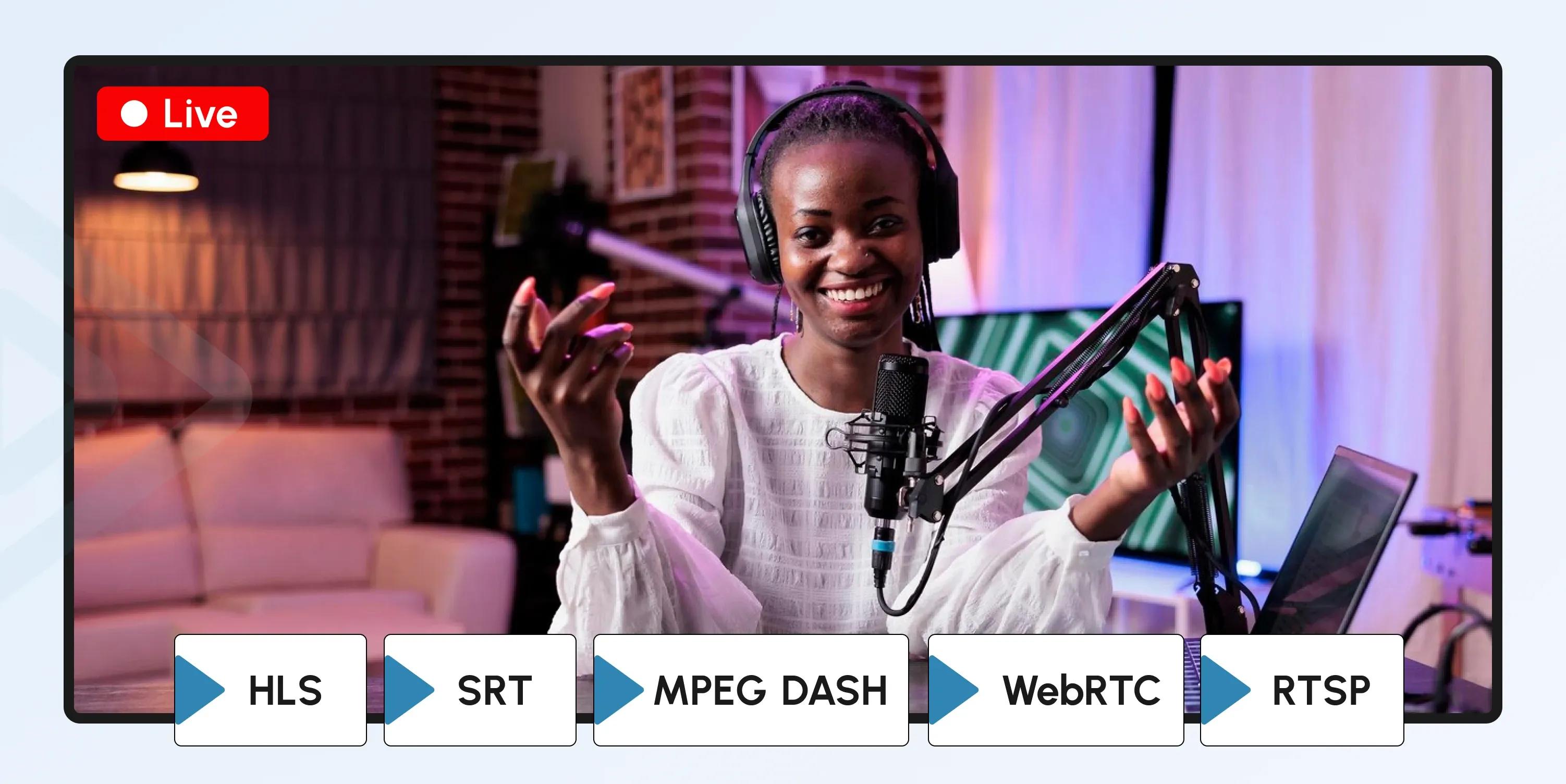
Different Video Streaming Formats
This basic video streaming protocol comparison focuses on the differences between the most commonly preferred protocols. It will clarify which protocol best suits individuals based on their features.
Real-Time Streaming Protocol (RTSP)
- RTSP is mainly utilized to control streaming sessions and grant functions such as pausing or playing.
- Thanks to live video streaming protocols, it can support both live and instantaneous content delivery.
- RTSP is typically used in video conferences or surveillance applications.
- It works with the RTP (Real-time Transport Protocol) to deliver media.
HTTP Live Streaming (HLS)
- HLS, developed by Apple, breaks down videos into segments for versatile streaming.
- It grants flawless redirection between varying quality levels depending on the viewer's bandwidth.
- HLS works seamlessly across various platforms, such as smart TVs.
- Thanks to its high compatibility, this video streaming protocol is used widely for live broadcasting and instant videos.
Secure Reliable Transport (SRT)
- SRT emphasizes low-latency video delivery across unreliable networks to guarantee top-notch streaming.
- It incorporates encryption alongside packet recovery mechanisms to uphold data integrity.
- SRT is the perfect choice for remote production workflows and live broadcasts.
- It’s highly favored for maintaining stable streams even under challenging network conditions.
WebRTC
- WebRTC is designed as a means of real-time communication, allowing for video, audio, and data sharing among peers.
- It makes use of revolutionary methods for secure communication.
- WebRTC supports low-latency connections, which makes it the perfect fit for live streams and video conferences.
- It’s a browser-compatible streaming protocol that’s also open-source. This allows users to integrate into web applications without needing plugins.
MPEG-DASH
- MPEG-DASH is a versatile video streaming protocol that dynamically alters the quality of a video based on network states.
- It utilizes standard HTTP, which grants compatibility across existing web frameworks.
- MPEG-DASH aligns perfectly with live streaming protocols and supports on-demand streams.
- It offers stellar video quality along with minimum buffering.
How Video Streaming Protocols Work
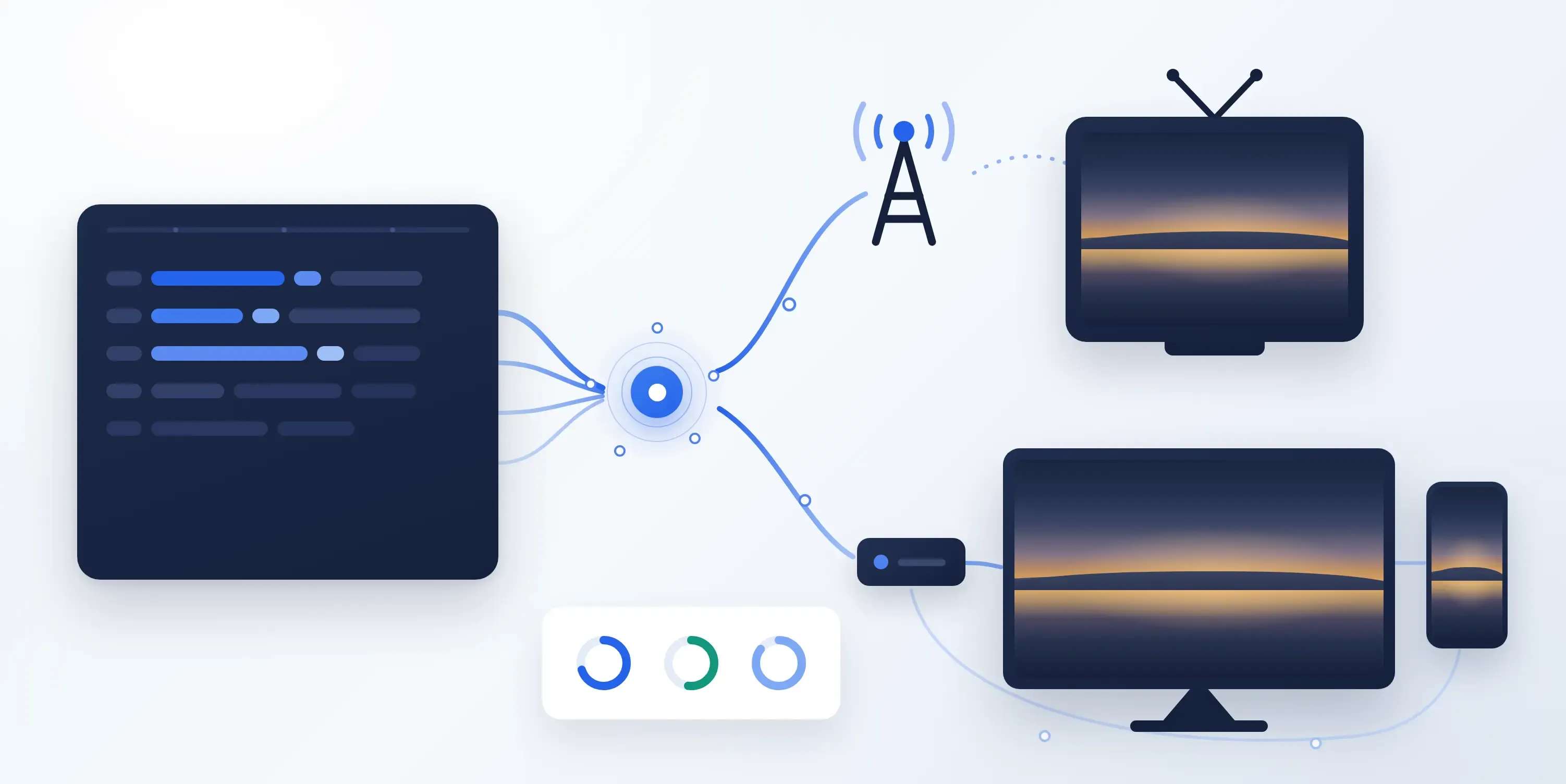
Video streaming protocols establish rules for transmitting video across the internet, whether for real-time or live content. When a viewer requests a video, the protocol connects the server and client, breaking the video into smaller “packets” to enhance delivery efficiency.
For example, HLS adapts video quality based on bandwidth, ensuring minimal buffering and smooth playback. RTSP allows real-time control over features like pause and play and adapts to network changes for reliability. Users often compare protocols, notably HLS vs. RTSP, to understand optimal performance in various scenarios.
inoRain offers the best streaming protocols and a range of world-class features to give end users an excellent viewing experience, regardless of where or what device they use. Contact us to learn more.
Key Factors When Choosing a Video Streaming Protocol
Ensuring compatibility with your target devices is crucial when selecting a streaming protocol. Each one has unique strengths and limitations, so consider these key points:
1. Scalability: Ensure the protocol can handle large audiences without sacrificing performance.
2. Compatibility: Choose a video streaming protocol that works across various platforms to reach a broader audience.
3. Security: Look for encryption and security features to protect content from unauthorized access.
4. Content Type: Select a protocol suited to your content type, whether live, on-demand, or interactive.
5. Latency: Low-latency video streaming protocols are essential for live streaming and real-time interaction.
6. Network Conditions: Assess how protocols manage varying bandwidth and network conditions.
7. Adaptability: Opt for video streaming protocols that support adaptive bitrate streaming to adjust video quality to network speed.
Use Cases for Different Video Streaming Protocols
Selecting the right streaming protocol ensures top-notch quality and minimal buffering. Let’s take a look at the streaming types some major industry players use:
- Twitch: Uses HLS, an HTTP-based media streaming communications protocol, to ensure flawless content and real-time interaction amongst streamers and audiences.
- Zoom: Uses RTMP to let users live stream to an unlimited audience, providing versatile streaming and smooth delivery.
- Netflix: Netflix uses the MPEG-DASH protocol for streaming alongside TCP as the transport layer protocol to provide first-class video content across various devices.
- Vimeo: Uses RTMP to present refined video quality and user experience through different devices and network states.
Video Streaming Protocols: Challenges
Live streaming protocols and those used for on-demand content delivery still face significant challenges that impact quality and reliability. Here are a few key obstacles:
Scalability Limitation: As your audience grows, regulating performance and upholding the same quality levels may impede and strain infrastructure and resources.
Security Risks: Securing content against unauthorized access and falling victim to piracy is a huge potential risk and entails vigorous and advanced security measures.
Complexity in Implementation: Setting up video streaming protocols can prove daunting, given the complexity and the requirement for specialized knowledge of tools.
Latency Issues: High latency is disruptive and tarnishes both on-demand and live streaming experiences and events. Additionally, inconsistent latency creates delays in communication and viewer interaction.
Network Instability: Fluctuations in network stability and bandwidth diminish the quality of a video, which can also lead to buffering.
Quality Consistency: Ensuring smooth, high-quality playback across changing network conditions remains challenging and can result in abrupt quality shifts that frustrate viewers.
Content Delivery: Delivering content reliably across regions introduces latency and performance inconsistencies, especially in remote areas or with global audiences.
Frequently Asked Questions

Content Manager
Anush Sargsyan is a content manager specializing in B2B content about OTT streaming technologies and digital media innovation. She creates informative, engaging content on video delivery, OTT monetization, and modern media technologies. The goal is to help readers easily understand complex ideas. Her writing is the bridge between technical detail and practical insight, making advanced concepts accessible for both industry professionals and general audiences.
Subscribe to Our OTT Blog
Want to learn more about OTT technology and monetization? Leave your best email here, and we'll keep you updated with our weekly articles.
Loading...