inoRain Changelog

Keep up with the latest product releases, improvements, and fixes across the inoRain OTT platform

This release adds a second subtitle track for multilingual viewers, two new playback quality metrics in the Analytics Dashboard, and native music file management for admins.

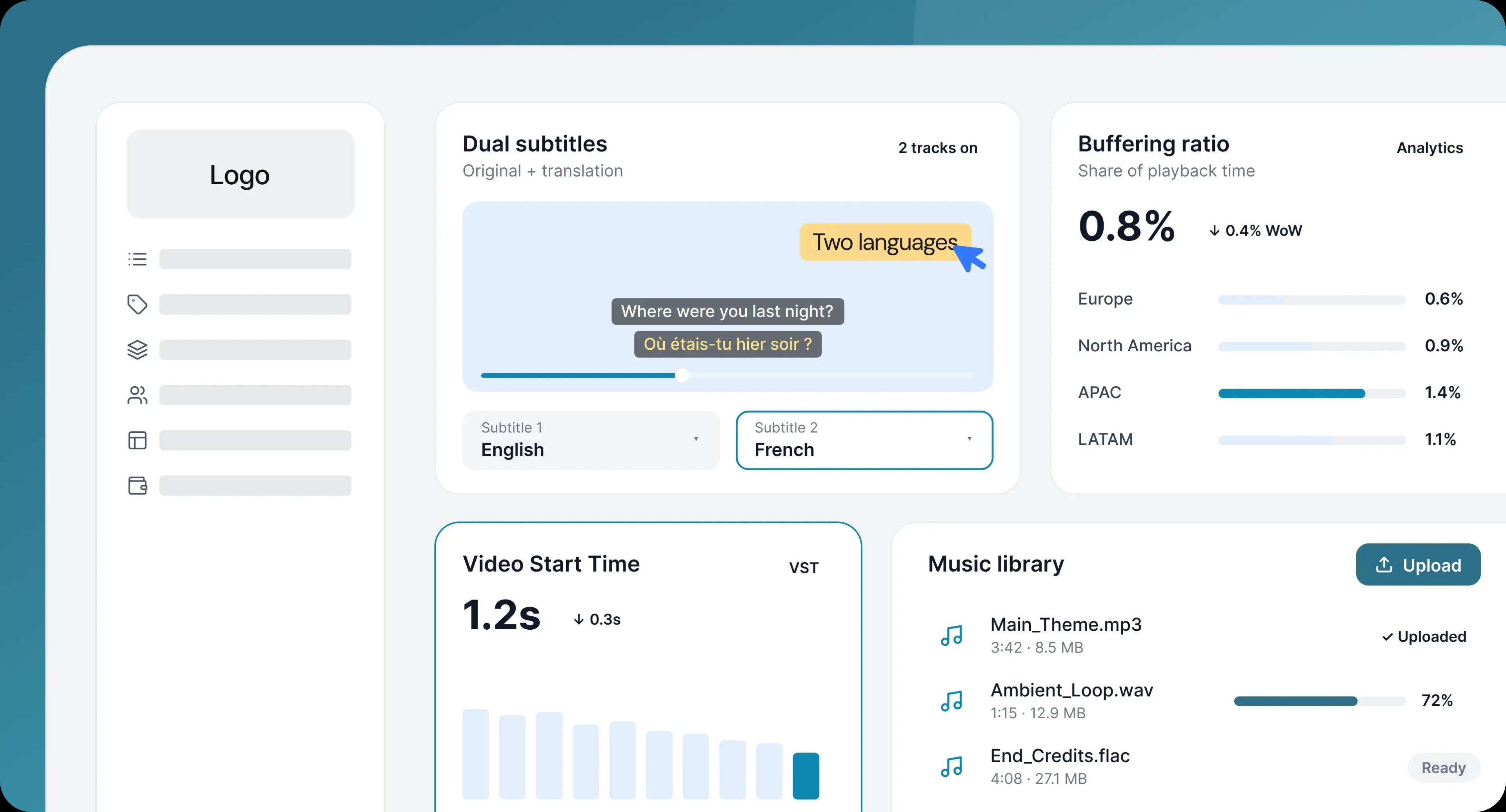
Dual subtitles

Viewers can now display two subtitle tracks at the same time - typically the original language alongside a translation. For audiences watching in a second language, and for households where one screen serves people who read different languages, it turns a title that worked for one viewer into one that works for the room. It’s also the feature language learners actively look for in a service.

Buffering ratio

The Analytics Dashboard now reports buffering ratio: the share of playback time lost to buffering. Instead of hearing that playback “feels slow,” you get a number you can watch over time and tie to a region, a title, or a delivery change - and you can tell whether the problem is your stack or the viewer’s connection.
Learn more

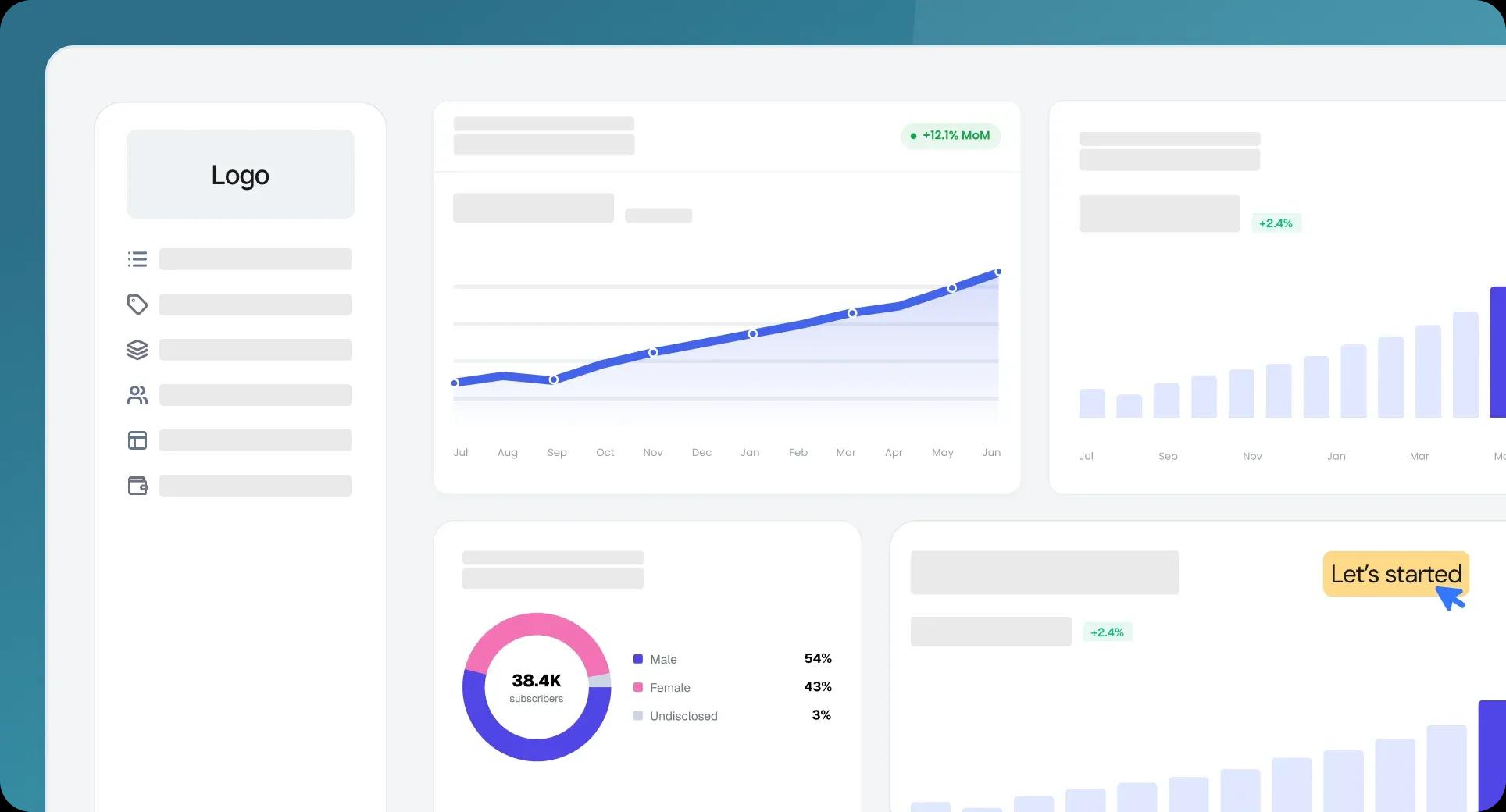
We've updated the Analytics Dashboard. And we've added three new metrics - completion rate, ARPU, and churn - calculated on the backend, so you can see how your content performs, what each subscriber is worth, and who you're losing, without exporting anything.

Seven KPIs on one dashboard

We've added all seven requested KPIs to the Analytics Dashboard, each with a clear label, its current value, and the supporting context needed to read it at a glance.

Video completion rate

You can now see how many viewers finish a title versus how many drop off before the end, so you can tell which content holds attention and which loses it.

Learn more

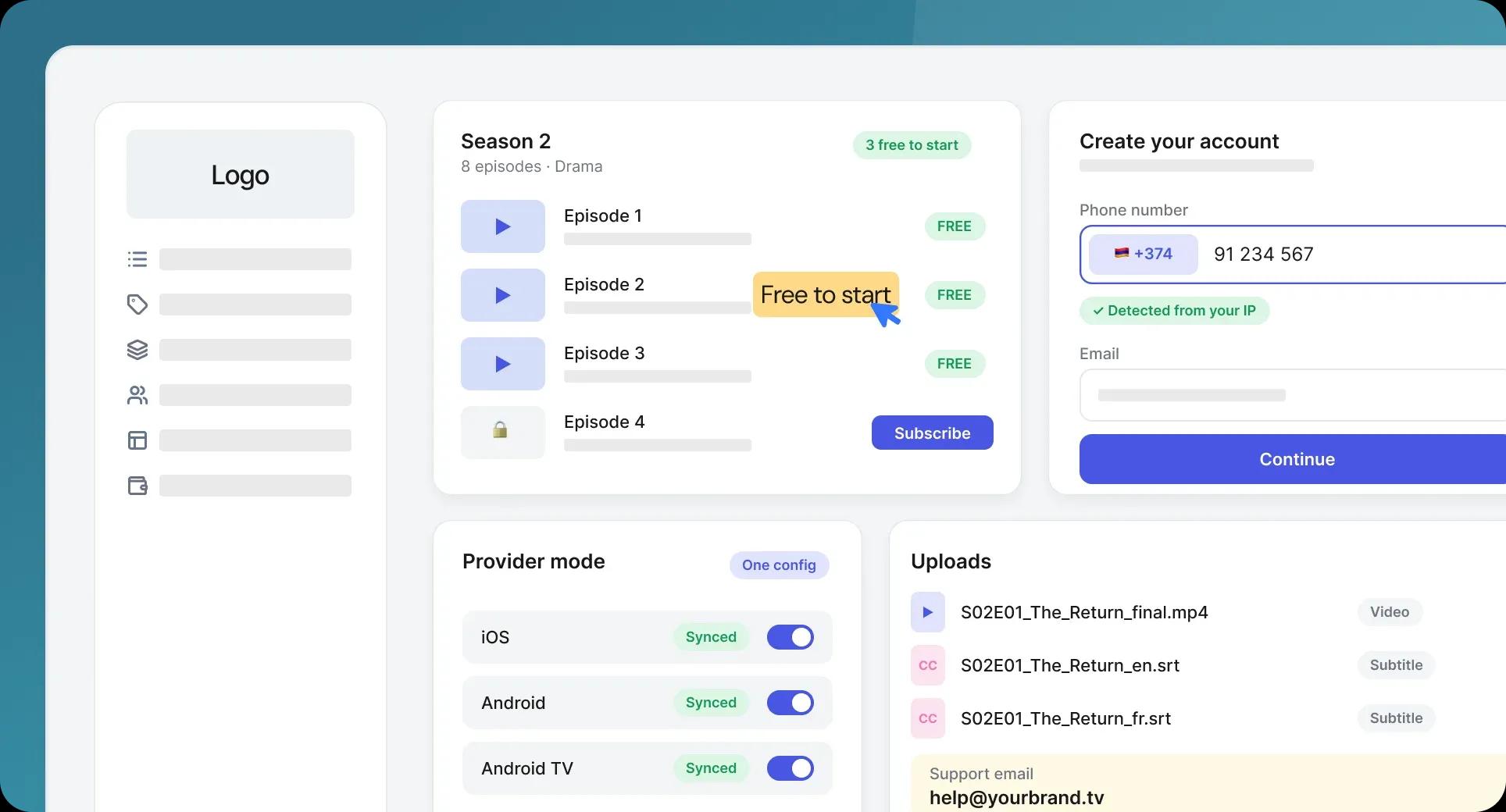
This release spans the mobile apps, the sign-up flow, content management, and admin tools. Provider mode now behaves the same way across every app, new subscribers get through sign-up with fewer taps, and you can give viewers a free taste of a series before asking them to subscribe.

Provider mode across all mobile apps

We've unified provider mode so it works identically in every mobile app, rather than being built separately for each one. One behavior, one configuration, whichever app your subscribers are on.

First episodes free before the paywall

You can now make the first one to three episodes of a series free for users who haven't subscribed yet, so people can start a story before they're asked to pay - and decide to subscribe because they're already invested.

Learn more

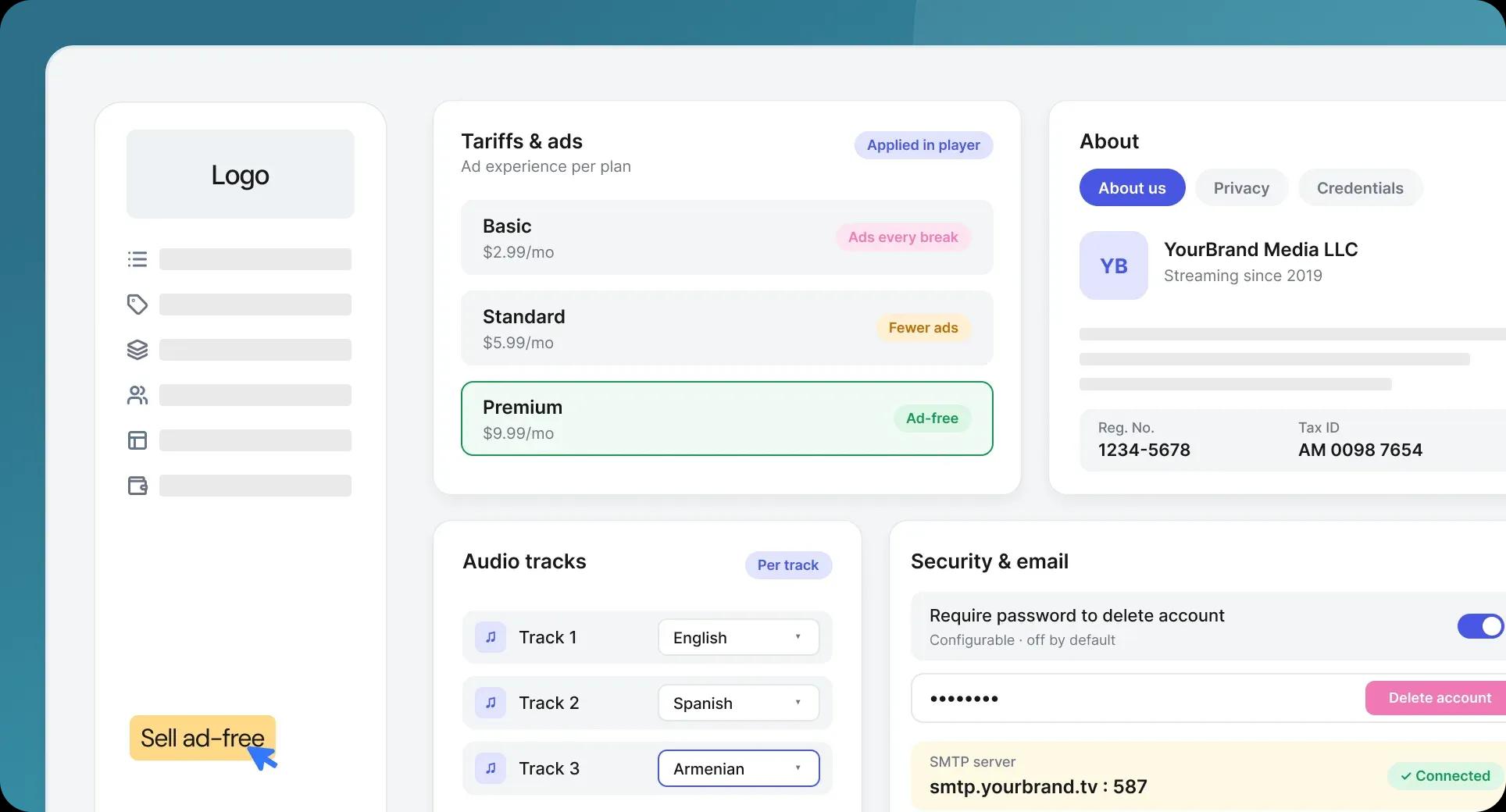
This release adds a business information page to the app, ties ad delivery to the subscriber's tariff, and gives you finer control over audio tracks and account security from the admin panel.

About Us, Privacy, and Credentials page

We've added a business information page to the app, covering your About Us content, privacy policy, and company credentials - so the details viewers and app stores expect are in one maintained place instead of scattered across screens.

Ads now follow the tariff

We've reworked how ads are retrieved so they respect the subscriber's tariff. Each plan now serves the ad experience it's supposed to - which means you can sell ad-free as a genuine upgrade rather than a promise the player doesn't keep.

Learn more

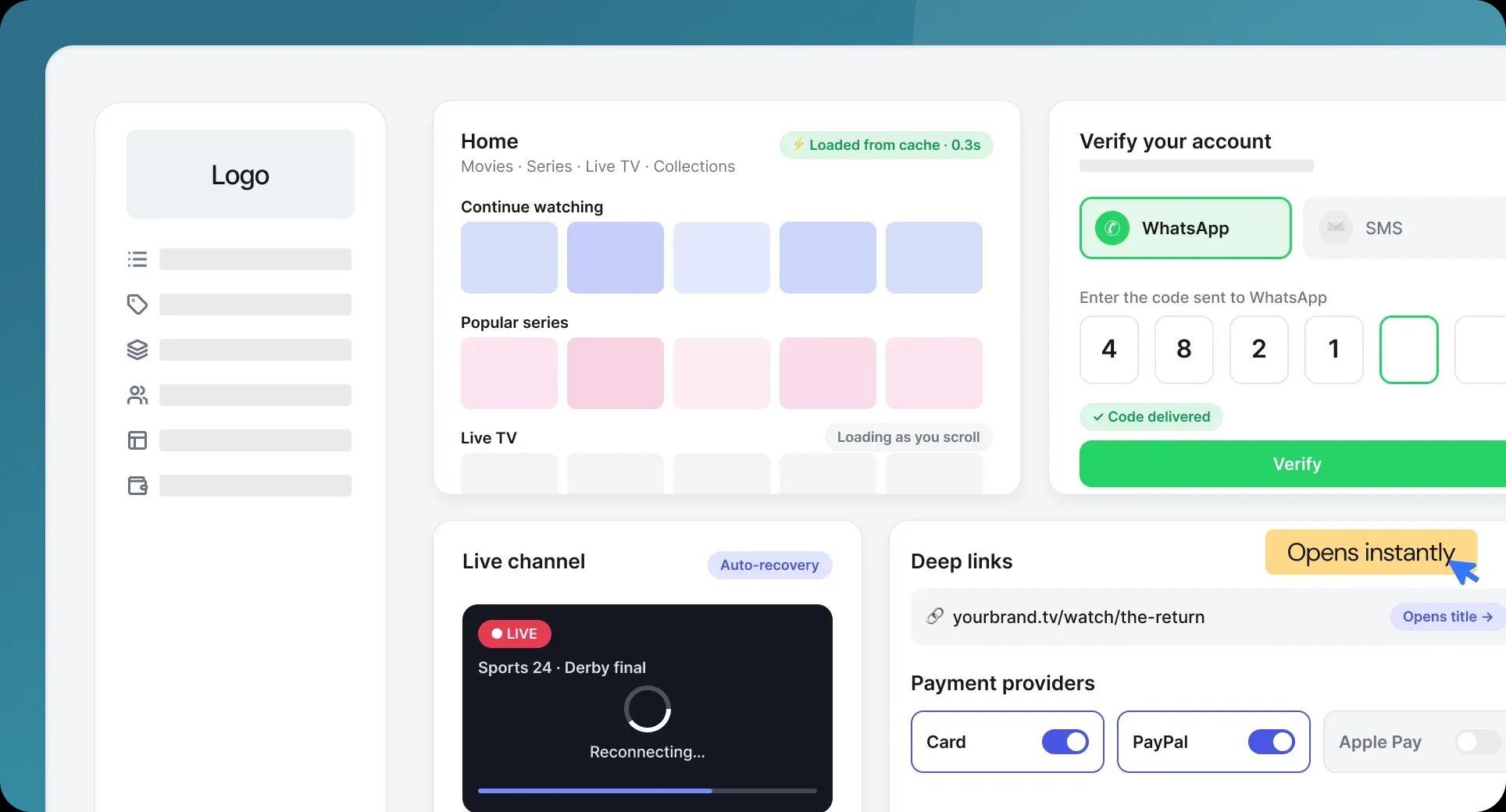
This release is mostly about speed and reliability. Apps now load from cache instead of re-fetching everything on every visit, live channels recover from instability instead of going black, and new users can verify their account over WhatsApp.

WhatsApp verification on Android and iOS

You can now verify new accounts over WhatsApp instead of SMS. For audiences where WhatsApp is the default messaging app, it's a faster and cheaper path through sign-up than a one-time code that may or may not arrive - and it's a setting you switch on per deployment.

Faster loading across the app

We've reworked how the app loads data. Home, Movies, Series, Live TV, Categories and Collections no longer re-fetch everything from the server on every visit - results are cached, heavy work moved to the background, and categories load lazily as you scroll. Content-heavy home pages that used to stall now open immediately, and the difference grows with the size of your catalog.

Learn more

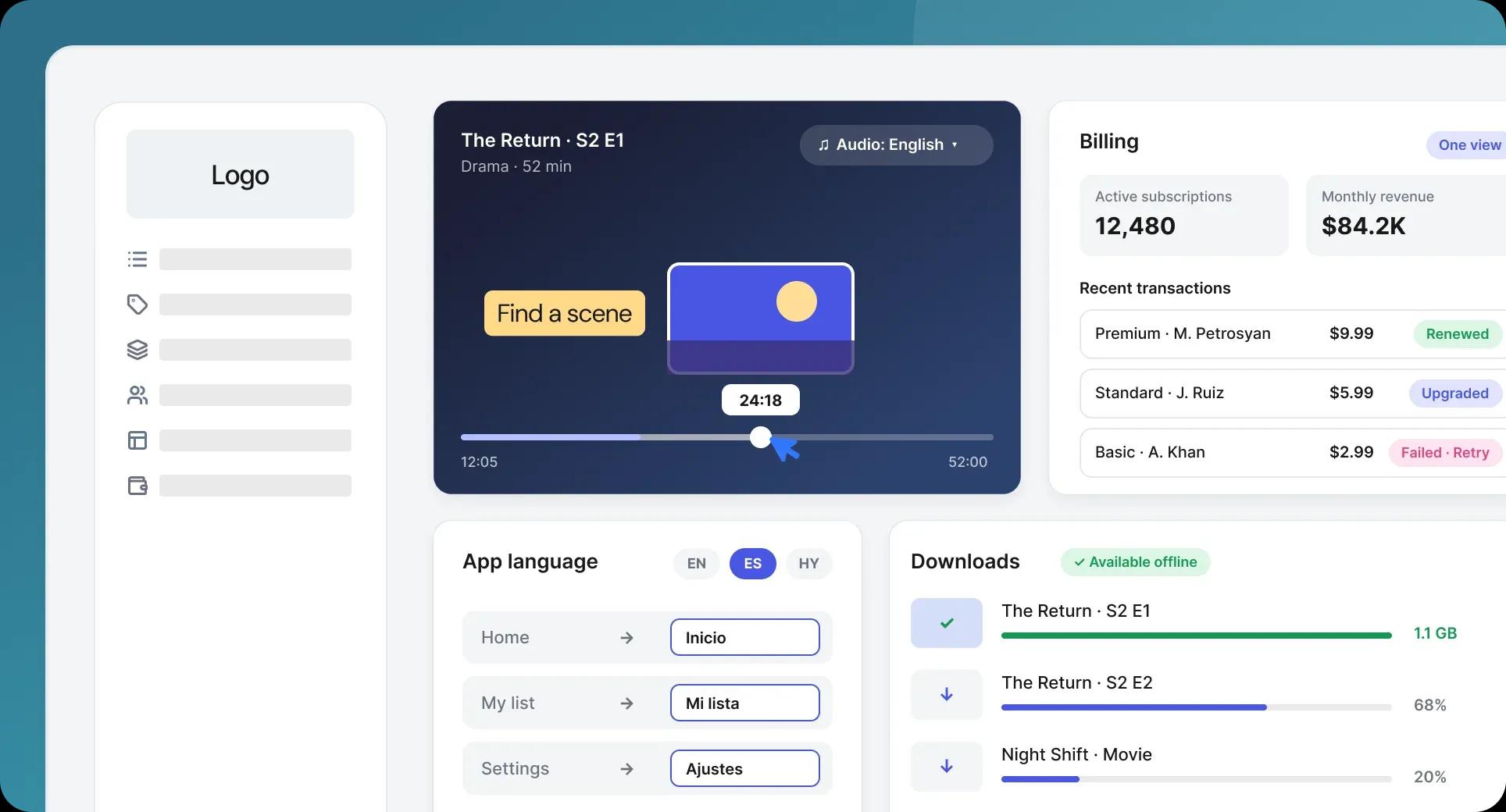
This release improves three different parts of the experience: finding the moment you want in a video, running subscriptions and payments from one place, and serving the app interface in your viewers' own language.

Preview images while scrubbing

Viewers now see preview thumbnails as they drag along the progress bar, so they can find the scene they're looking for instead of guessing and overshooting. It's a small interaction that people notice immediately when it's missing - and it's what makes rewatching a favorite moment effortless.

Billing management

Administrators can now manage subscriptions and payments from a single place - plans, renewals and transactions in one view rather than split across systems. Monetization stops being something you reconcile after the fact and becomes something you operate.

Learn more

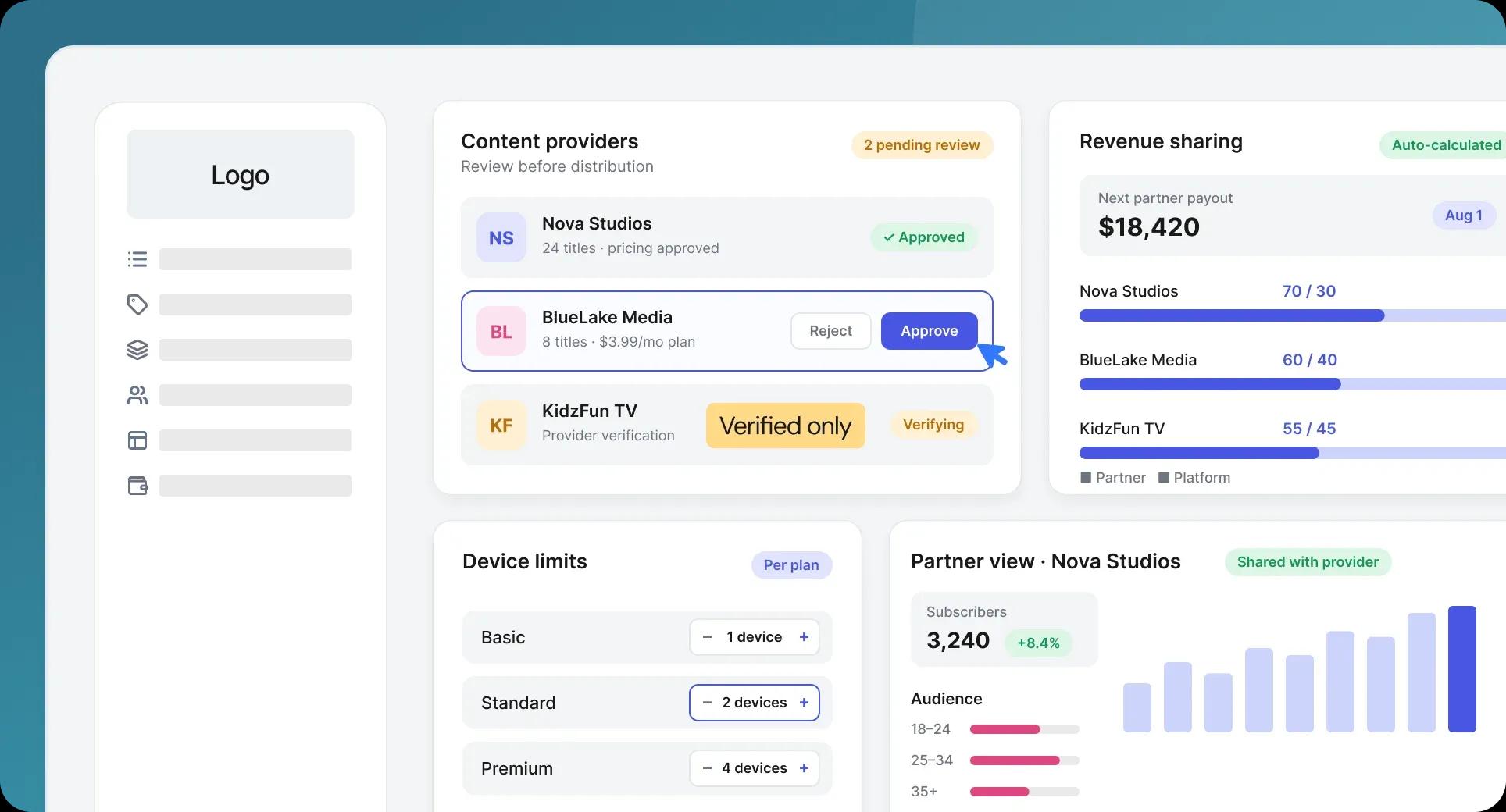
We've launched the Content Partner Portal. It turns the platform from a service you publish to into a partner portal you can run: third-party providers can be verified, their content and pricing approved, their revenue share configured, and both sides of the relationship can see how the content is performing.

Provider approval and content moderation

Administrators can now approve providers before they're allowed to distribute, and review content and pricing before it goes live. Only verified partners reach your audience, and nothing appears in the catalog - at any price - without passing your review first. Partner portal quality stops depending on trust and starts depending on a gate.

Learn more

Skip intro, autoplaying trailers, and per-title purchase data

  • skip intro
  • autoplaying trailers

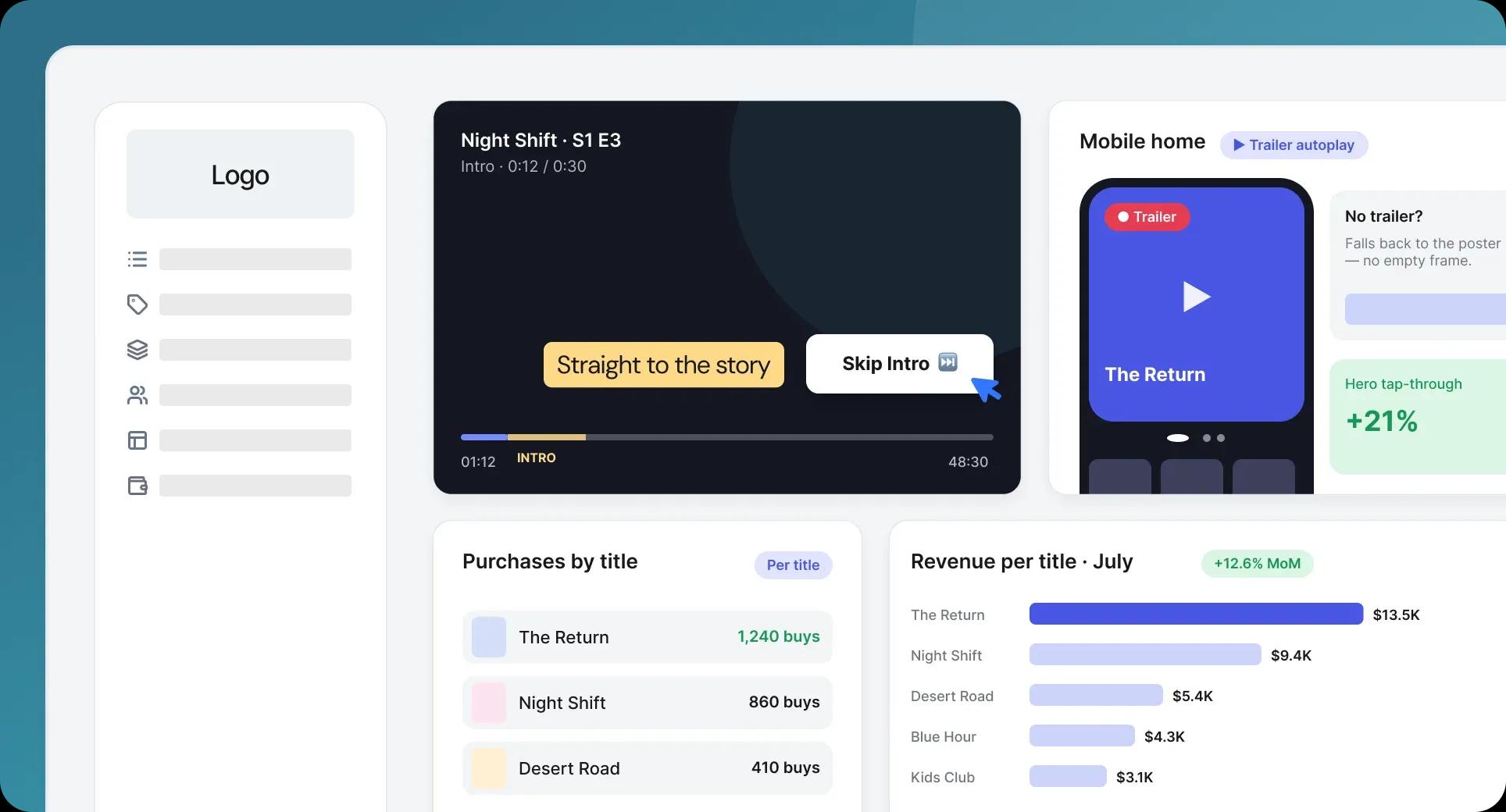
Three additions: one that saves viewers a few seconds on every episode, one that makes the app's home screen sell content on its own, and one that tells you which titles earn their place in the catalog.

Skip intro

The player now shows a Skip Intro button on movies and episodes, so viewers can jump straight into the story. On a binge session it's the difference between watching a show and repeatedly waiting through the same thirty seconds - and it's the kind of thing audiences now expect by default.

Trailers that play in the hero slider

The mobile app's hero slider now plays the trailer for whichever slide is active, so your featured content sells itself in motion rather than as a still image. When a title has no trailer available, the slider falls back gracefully instead of stalling on an empty frame.

Learn more

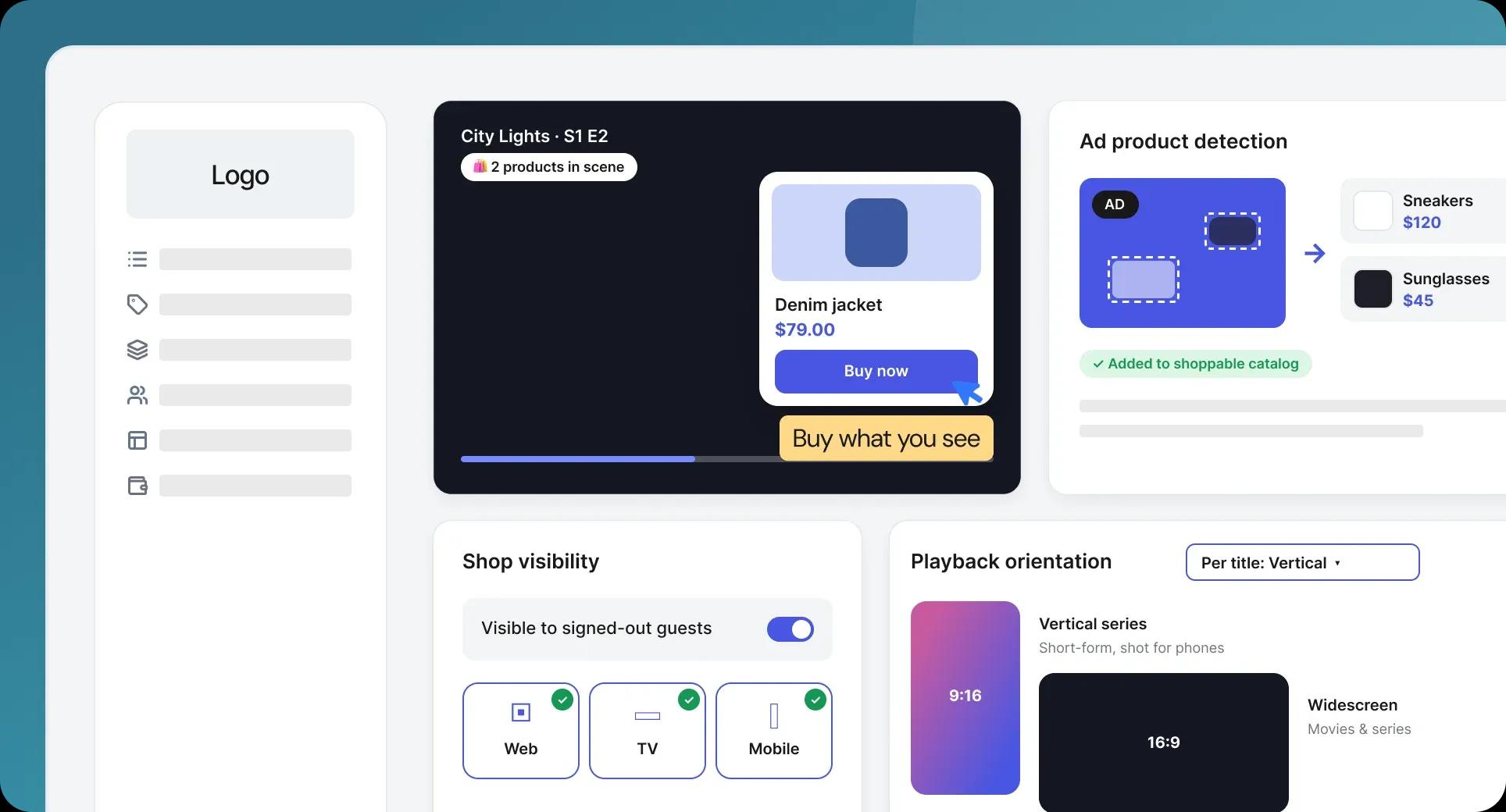
We've launched Shoppable Video - a new way to turn viewing into buying. Products that appear on screen are detected while the video plays and surfaced as purchasable items over the picture, so viewers can buy what they see without leaving the story. It's available on web, TV and mobile, and it works for signed-out visitors too.

What Shoppable Video does

The player identifies products shown in your content and displays the matching purchasable items as an overlay. Someone who notices a jacket in a scene can buy it in the moment, while the interest is still there. Your catalog stops being only something people watch and becomes something they shop - and every minute of viewing carries commercial intent alongside it.

Learn more

Three changes: the interface now renders properly in Arabic, related products can be grouped and reported on as a unit, and the parental PIN is no longer forced on deployments that don't want it.

Full right-to-left support for Arabic

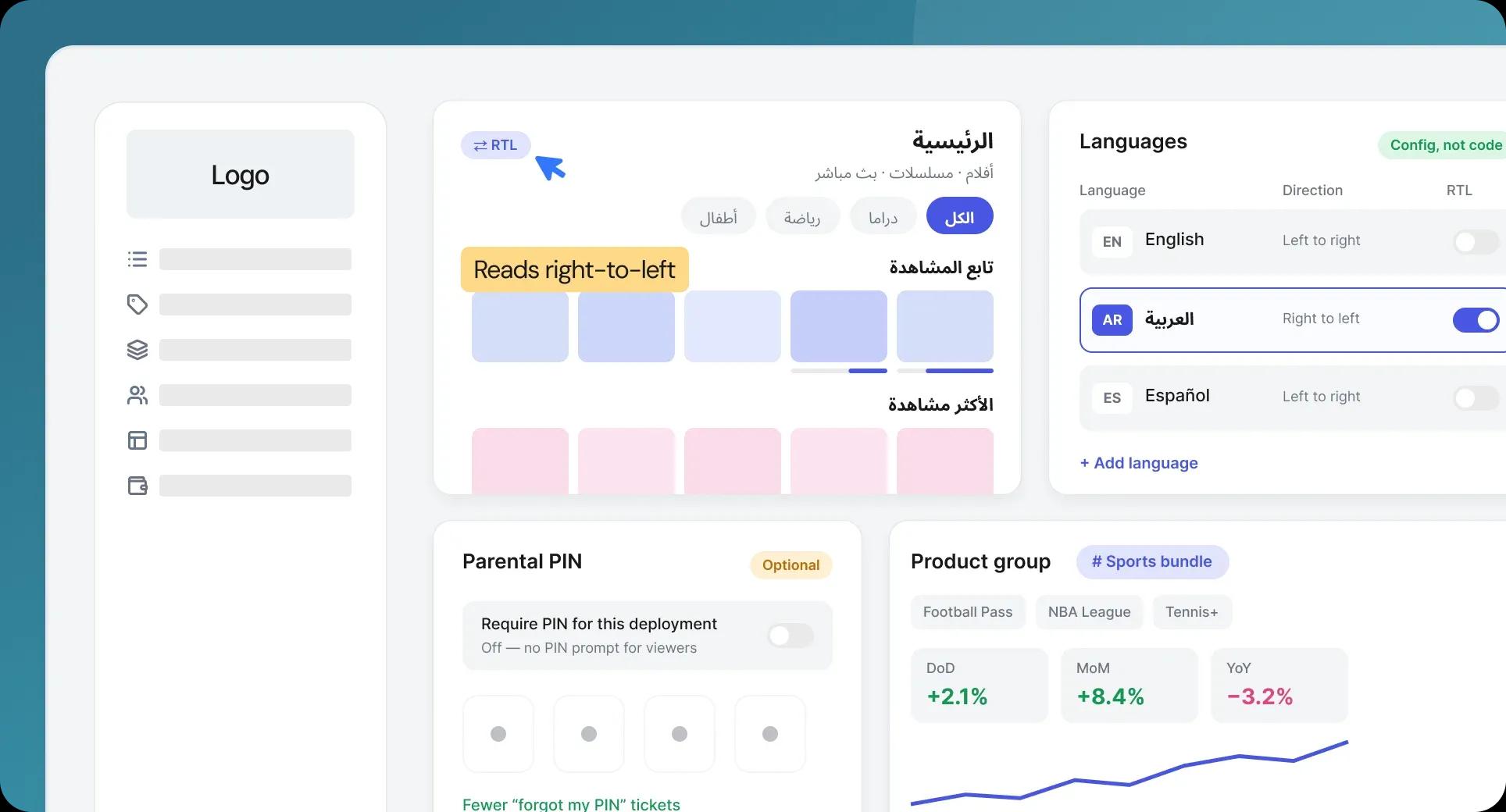
When a viewer selects Arabic, the entire interface now renders right-to-left - layout, navigation and text direction, not just translated strings in a left-to-right frame. The behavior follows the RTL flag in the language configuration, so adding another right-to-left language later is a configuration change rather than a rebuild. Arabic-speaking markets get an app that reads the way they do.

Learn more

This release is about the big screen: deploying many of them at once, navigating them more naturally, and making what's on them easier to browse.

TV Wall

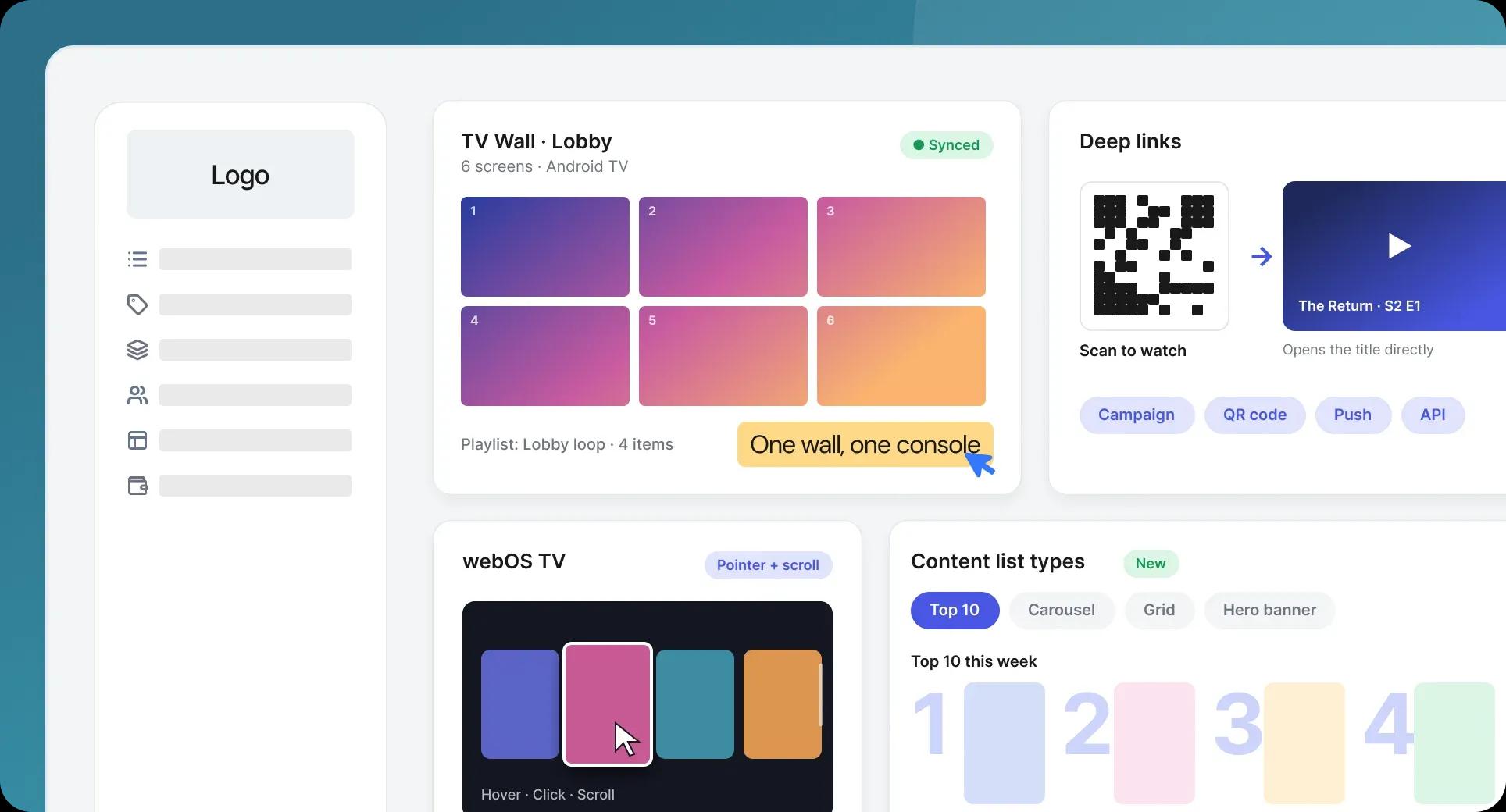
You can now deploy and manage multiple Android TV applications across synchronized screen grids. Video walls in retail, hospitality, stadiums and public venues become something you run from the platform rather than a separate installation per screen.

Deep links from campaigns and QR codes

Deep links now also open content directly from marketing campaigns, QR codes, push notifications and external integrations. The journey from a poster in a venue to a playing title is a single scan.

Learn more

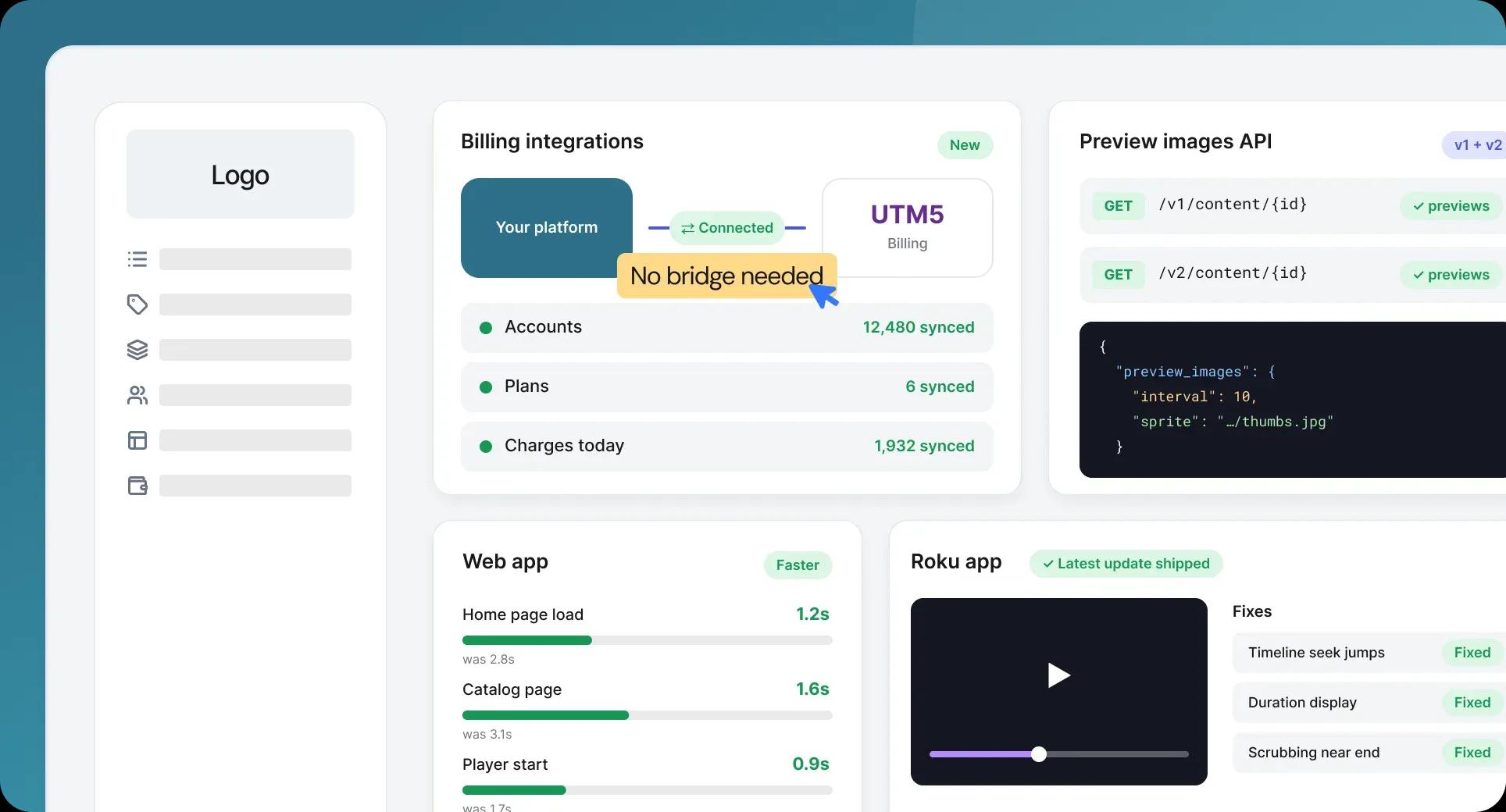
A maintenance release: one new billing integration, groundwork for preview images across both API versions, and a round of stability work on the web and Roku apps.

UTM5 billing integration

The platform now integrates with UTM5 billing, so operators already running UTM5 can connect subscriber and payment data directly instead of maintaining a bridge between two systems. Accounts, plans and charges stay in one place.

Preview image support on both API versions

The platform now serves preview images on both API versions, so deployments on either version are ready for them - no one will have to migrate to get the feature when it reaches the player.

Learn more

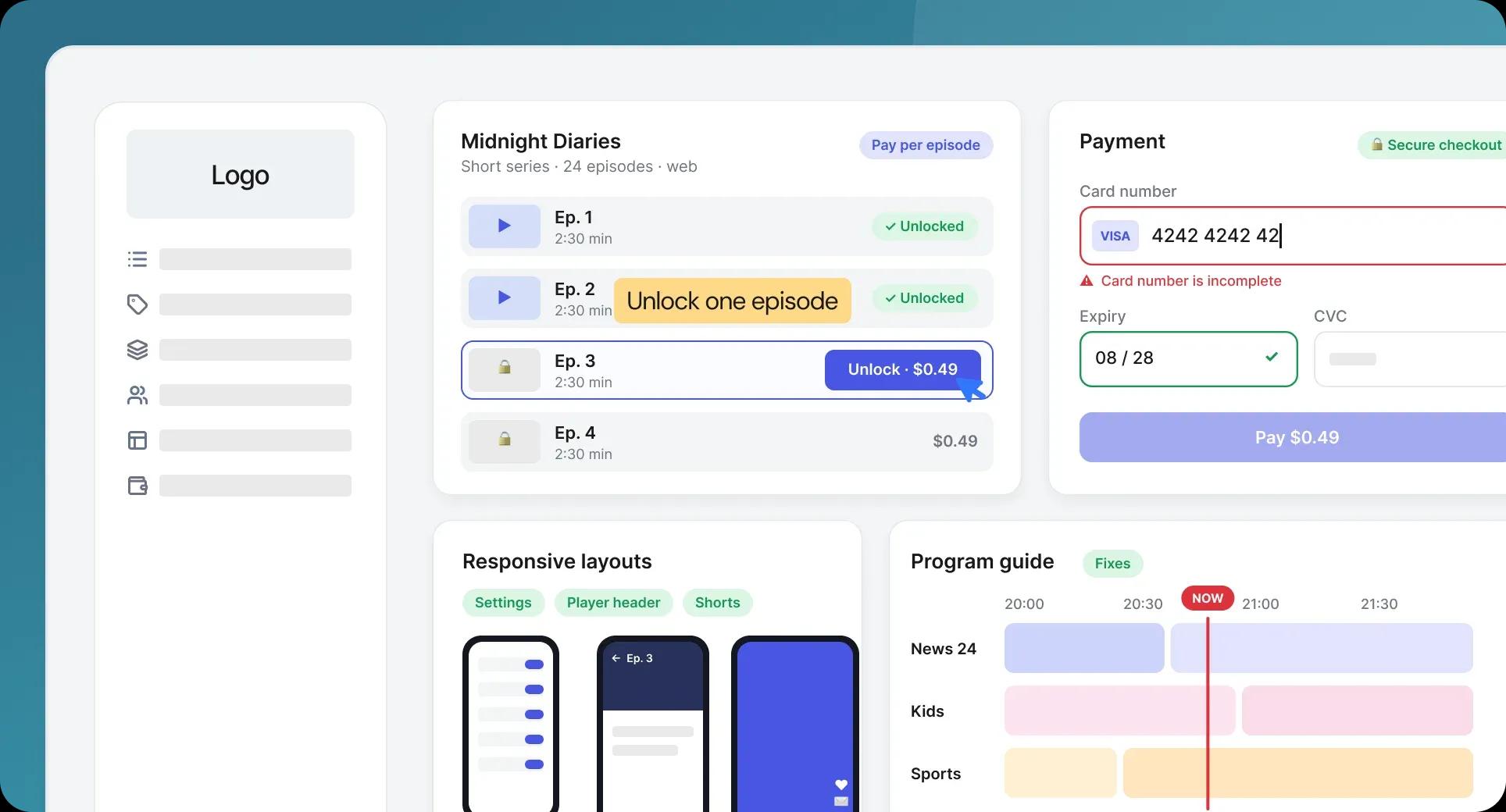
Episode monetization on the web, safer checkout, and responsive fixes

  • Episode monetization
  • Credit card
  • Responsive layout

This release brings episode-level monetization to the web platform, tightens up payment forms, and fixes how several screens behave on smaller displays.

Episode monetization on web

The web platform now supports monetization for episode-based content, so viewers can buy or unlock individual episodes rather than only a full subscription or a whole series. For short-form and serialized catalogs, that's the pricing model the format was built for - low commitment to start, revenue that accumulates episode by episode.

Learn more

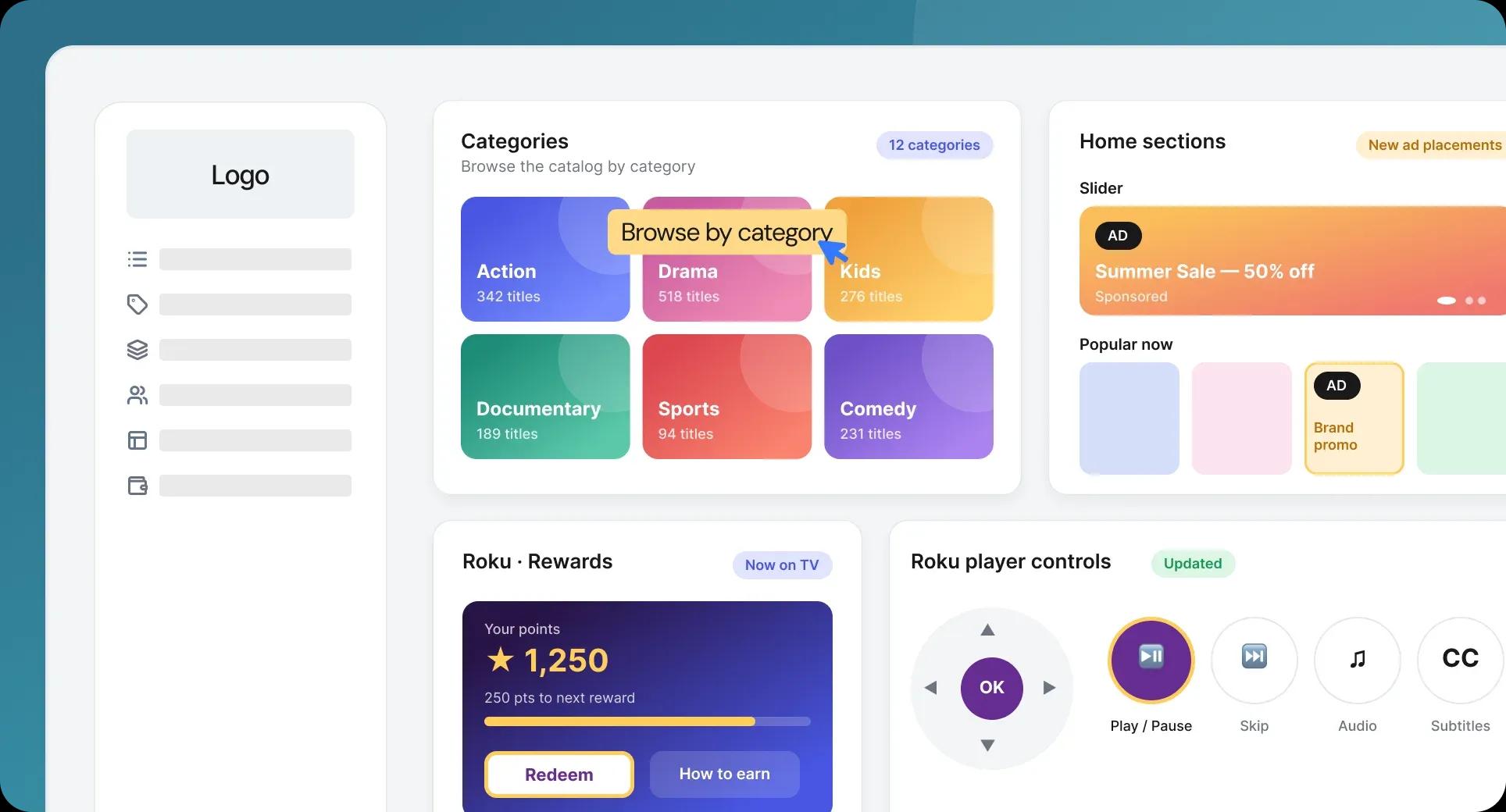
Three additions: a proper categories list for navigating large catalogs, new ad placements in card and slider sections, and the Rewarding System arriving on Roku alongside a refreshed set of player controls.

Categories listing

The platform now supports a categories listing, so viewers can browse your catalog by category rather than scrolling until something catches their eye. On a large library, that's the difference between finding what you came for and giving up - and it gives you another surface to organize content around.

Learn more

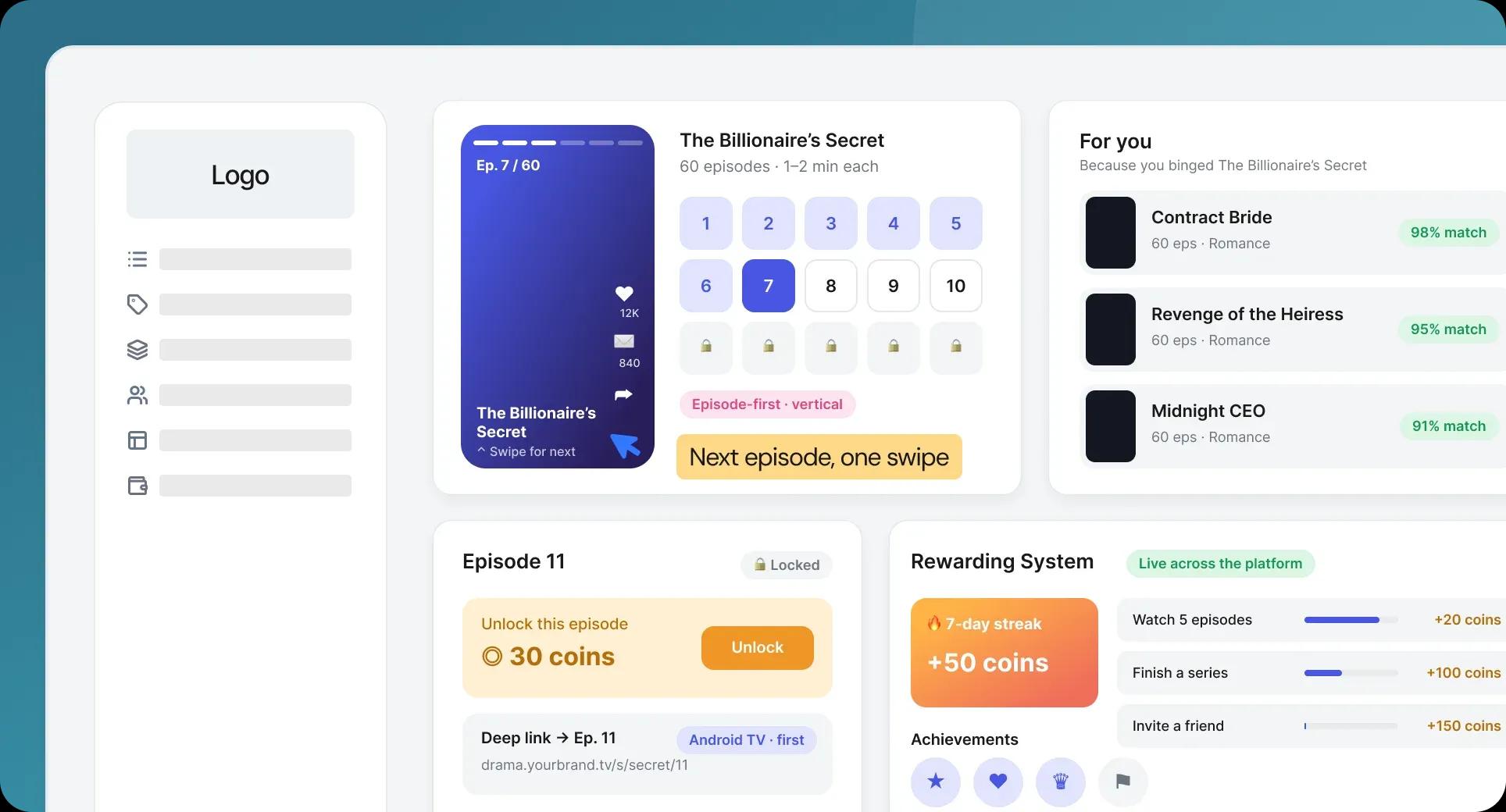
We've launched the Micro Drama Platform - a complete entertainment platform built around short-form, serialized drama, live now on web and mobile. It ships with its own rewards mechanics, personalized discovery, and a viewing experience designed for the format rather than adapted to it.

A platform built for the format

Micro drama isn't long-form content cut into pieces - it's a different product, with different pacing, different discovery and a different relationship to payment. The platform is built accordingly: vertical, episode-first, tuned for sessions measured in minutes.

Learn more

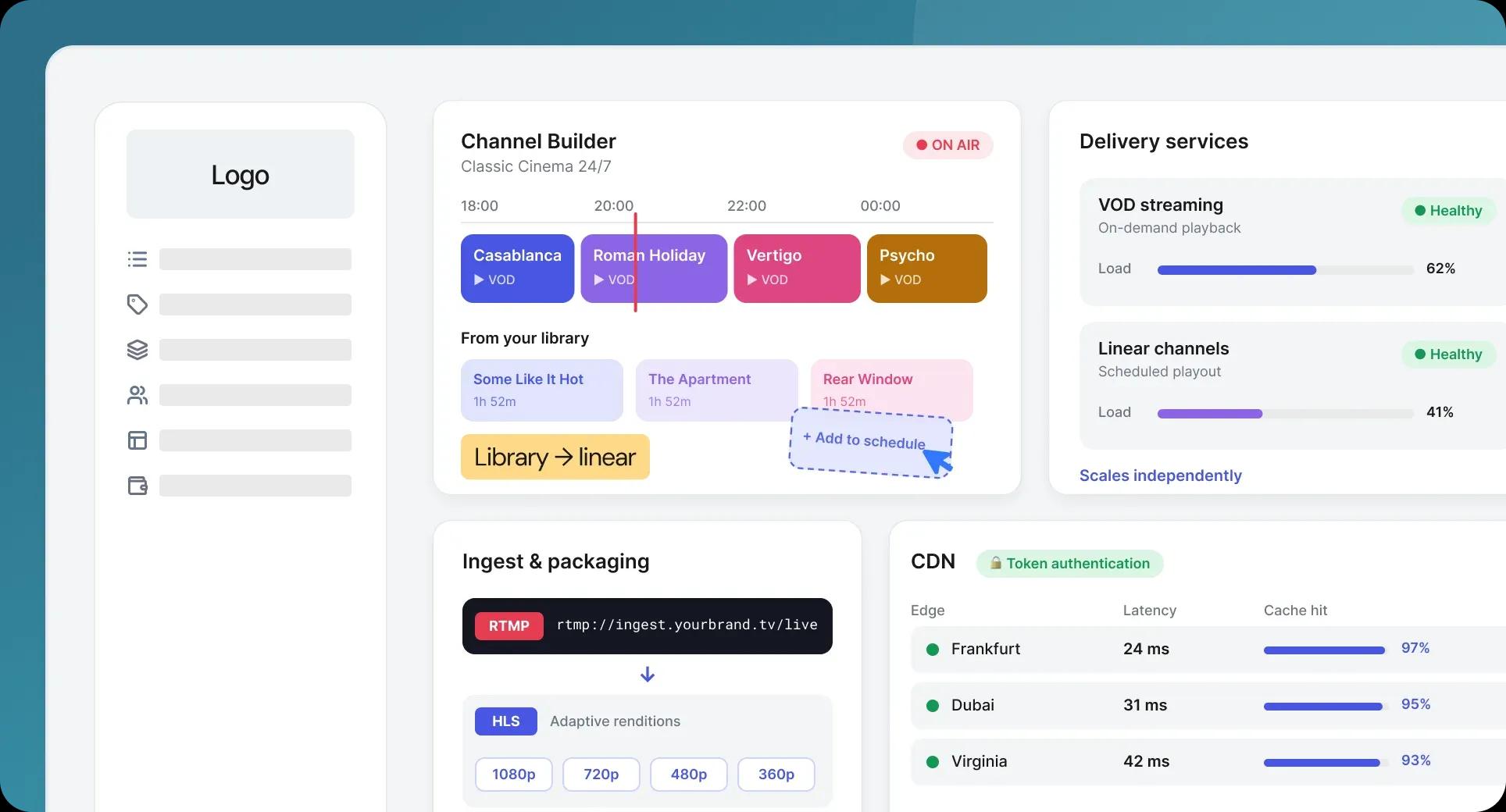
We've launched Channel Builder, a new way to run linear television from content you already own. Alongside it, a dedicated VOD streaming service, RTMP ingest, HLS generation and an authenticated CDN complete the delivery stack underneath.

What Channel Builder does

Operators can now create and manage live channels built from the VOD library - schedule titles into a linear stream and broadcast them as a channel. The library you've been renting out on demand becomes programming, without new content, new rights or new production. For operators whose audiences still want something to just turn on and watch, it bridges broadcast and streaming in one workflow.

Learn more

One-click sign-in and content from YouTube and Spotify

  • Youtube
  • Spotify
  • Magic link

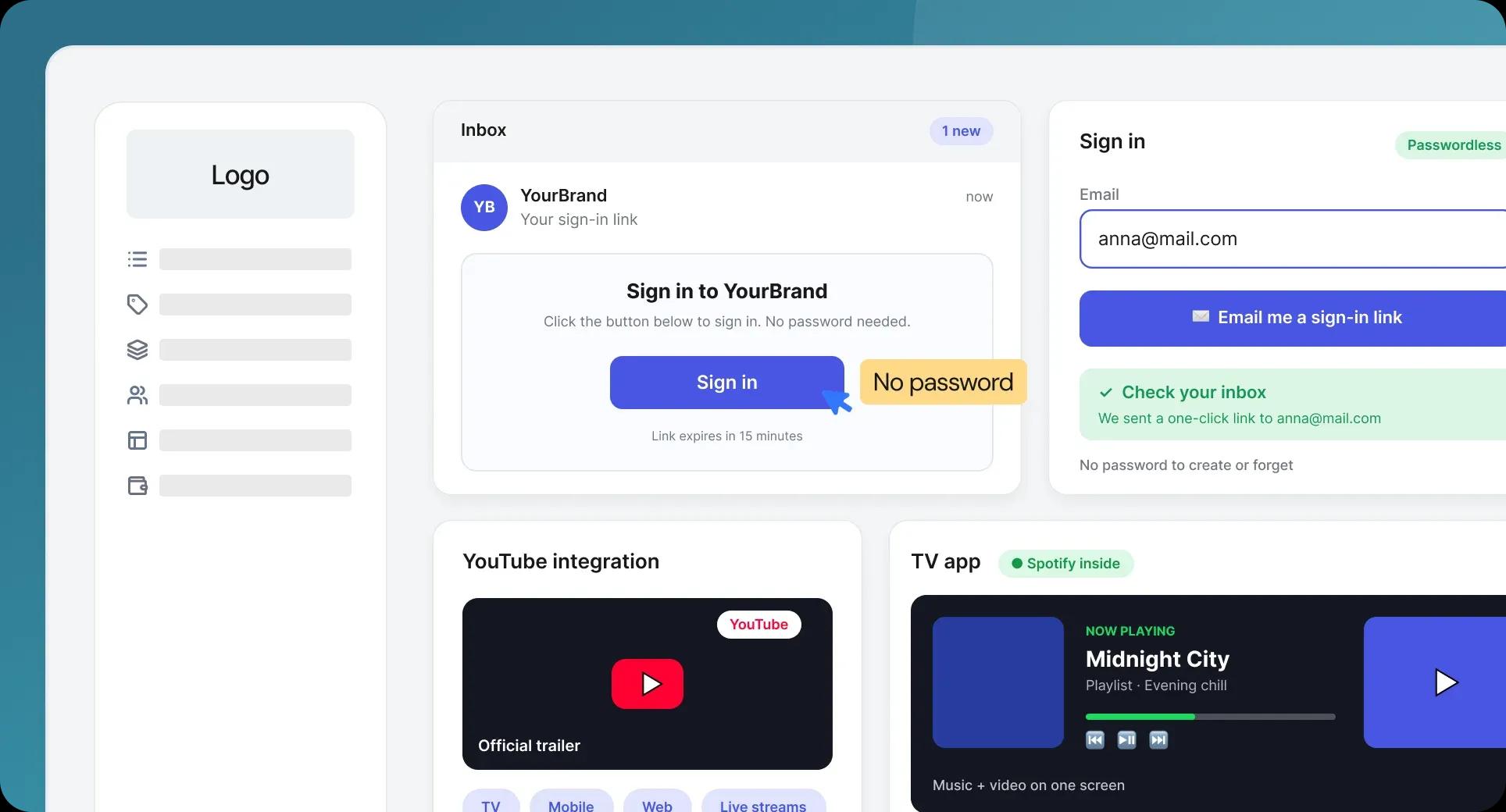
This release removes the most common reason people abandon sign-up, and brings two of the world's largest content libraries inside your app.

Magic Link login

Viewers can now sign in with a secure one-click link sent to their email. No password to create, no password to forget, no recovery flow to fail at - which shows up directly in sign-up conversion and in the volume of support requests you never receive.

YouTube integration

You can now embed YouTube content across TV, mobile and web - trailers, promotional videos and live streams. No separate hosting, no duplicate uploads, and playback and management stay inside the platform.

Learn more

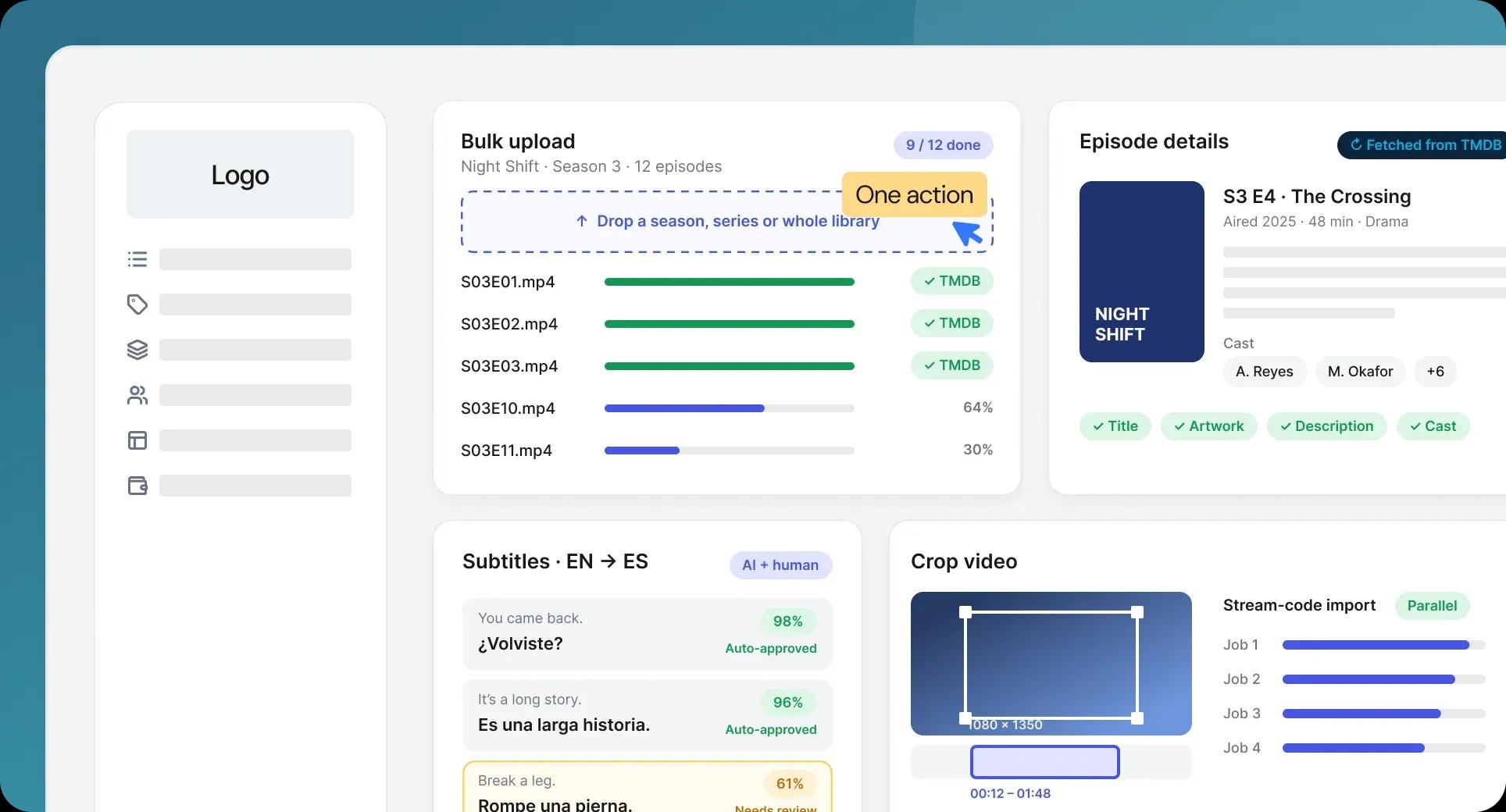
Getting content onto the platform and into your viewers' languages used to be the slowest part of running a catalog. This release attacks both.

Bulk upload for whole seasons and libraries

You can now upload an entire season, series or content library in a single operation instead of title by title. What took an afternoon takes one action.

##Automatic metadata from TMDB

Episode metadata, artwork and descriptions are now fetched automatically from TMDB. Your catalog arrives complete rather than needing a second pass to fill in what's missing.

Learn more